The Magic of Feng Shui: Can You Really Use Energy Principles To Create Harmony In Your Home?
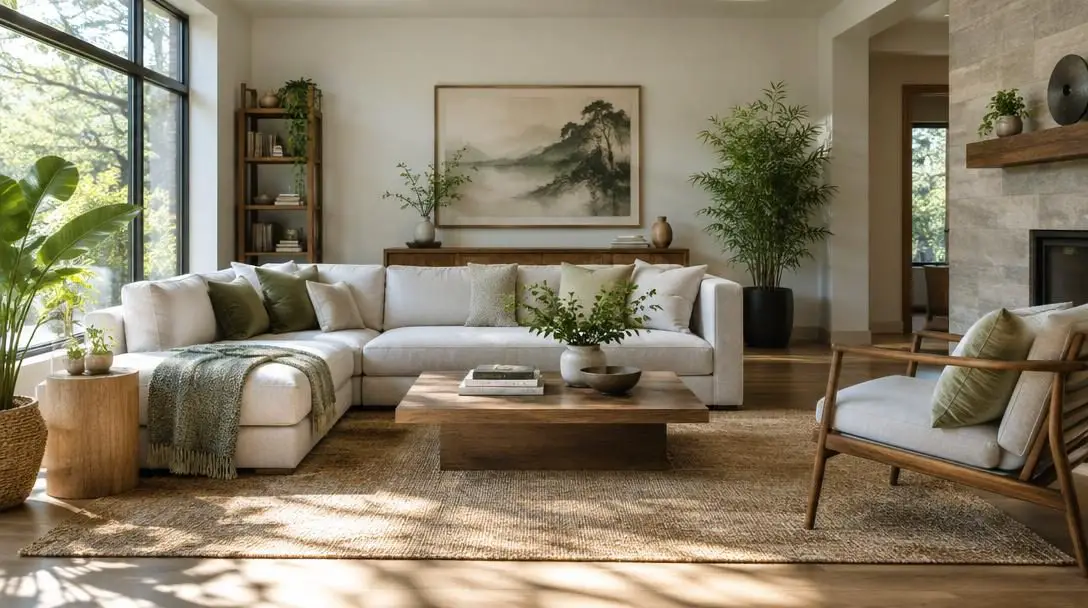
For more than 3,000 years, traditional Chinese culture has relied on the philosophy of Feng Shui to balance the dynamic interaction between human beings and their physical habitats. Literally translated as "wind" and "water," this ancient discipline views the natural world as an interrelated web of moving energy. Wind disperses vitality through the atmosphere, while water gathers and sustains it across the land. By bringing these natural forces into structural alignment indoors, practitioners seek to design living spaces that actively nurture health, comfort, and peace of mind.
Rather than treating interior design merely as an aesthetic exercise, Feng Shui views the home as a direct reflection and driver of inner emotional states. Every architectural threshold, furniture arrangement, decorative accent, and lighting choice contributes to the overall atmosphere of a dwelling. When personal living quarters are intentionally organized to support steady energy flow, daily life within those walls becomes more focused, restful, and restorative.
Key takeaways
- Feng Shui is an ancient spatial philosophy focused on aligning interior environments with natural energy flows to improve personal well-being.
- Core frameworks include balancing restful Yin and active Yang, mapping spaces through the nine-sector Bagua grid, and harmonizing the five natural elements.
- Meaningful environmental changes do not demand substantial financial investment; thorough decluttering and practical furniture adjustments cost virtually nothing.
- Optimizing energy pathways helps reduce daily stress, deepens sleep quality, promotes mental focus, and supports harmonious household relationships.
The Philosophical Core: Yin, Yang, and Environmental Interconnection
At the center of Feng Shui philosophy is the premise that an interior environment is never neutral. It functions as an active participant in our thoughts, choices, and interactions. In classical thought, physical surroundings and human psychology engage in constant dialogue. When rooms become chaotic, dim, or physically obstructed, the ambient energy turns sluggish and stagnant. Conversely, spaces organized with mindful proportion and open channels generate a buoyant, supportive domestic atmosphere.
In classical thought, the environment is not a passive backdrop; it is an active participant in our daily lives.
Achieving this interior equilibrium requires understanding the complementary interplay between Yin and Yang. These two polar energies govern every phenomenon in the natural world, operating not in opposition, but as interdependent halves of a cohesive whole:
- Yin Energy: Represents darkness, quietness, stillness, physical rest, and inward contemplation. It delivers the soothing, restorative stability that human beings require to recuperate after strenuous mental or physical activity.
- Yang Energy: Represents brightness, warmth, dynamic movement, outward engagement, and productive activity. It provides the vitality and focus required to work, build, socialize, and innovate.
Neither energy is superior to the other; true environmental harmony requires an intentional balance of both. A home overwhelmed by unchecked Yang energy can quickly feel overstimulating, bright, and exhausting. Conversely, a residence that tilts completely into unchecked Yin energy risks feeling gloomy, drafty, and lethargic. Successful design aligns the ratio of Yin and Yang with the specific functional purpose of every individual room.
Mapping the Home: The Nine Sectors of the Bagua Grid
To evaluate how energy moves through a residence, practitioners utilize a foundational diagnostic tool known as the Bagua map. The Bagua divides any home, apartment, or single room into a grid of nine distinct sectors. Each specific sector corresponds to a fundamental dimension of human life and aspiration, linking physical geography to daily experience.
The primary life aspects evaluated through the Bagua include:
- Health and Vitality: Anchored at the central core of the home, this sector symbolizes overall physical strength, equilibrium, and grounding.
- Wealth and Abundance: Associated with financial security, material stability, resourcefulness, and personal prosperity.
- Love and Relationships: Pertaining to marital harmony, romantic partnerships, emotional bonds, and mutual trust between individuals.
- Career and Life Journey: Reflecting occupational progress, personal vocation, professional purpose, and ongoing life direction.
- Fame and Reputation: Involving how an individual is perceived by the broader community, integrity, visibility, and social respect.
- Family and New Beginnings: Representing ancestral roots, generational harmony, domestic stability, and novel initiatives.
- Creativity and Children: Connecting to creative imagination, artistic expression, future progeny, and joyous recreation.
- Knowledge and Cultivation: Centering on intellectual clarity, ongoing education, personal wisdom, and spiritual growth.
- Helpful People and Travel: Governed by networking, external support systems, mentorship, community assistance, and safe passage.
To orient the Bagua over your floor plan, use the wall containing your primary front entrance as the baseline. By viewing your home through this spatial framework, you can identify where specific life priorities reside within your physical layout. If a particular area of life feels strained, targeted adjustments to that sector's corresponding room can help restore balance and clear stagnant conditions.
The Five Elements: Balancing Materials, Shapes, and Colors
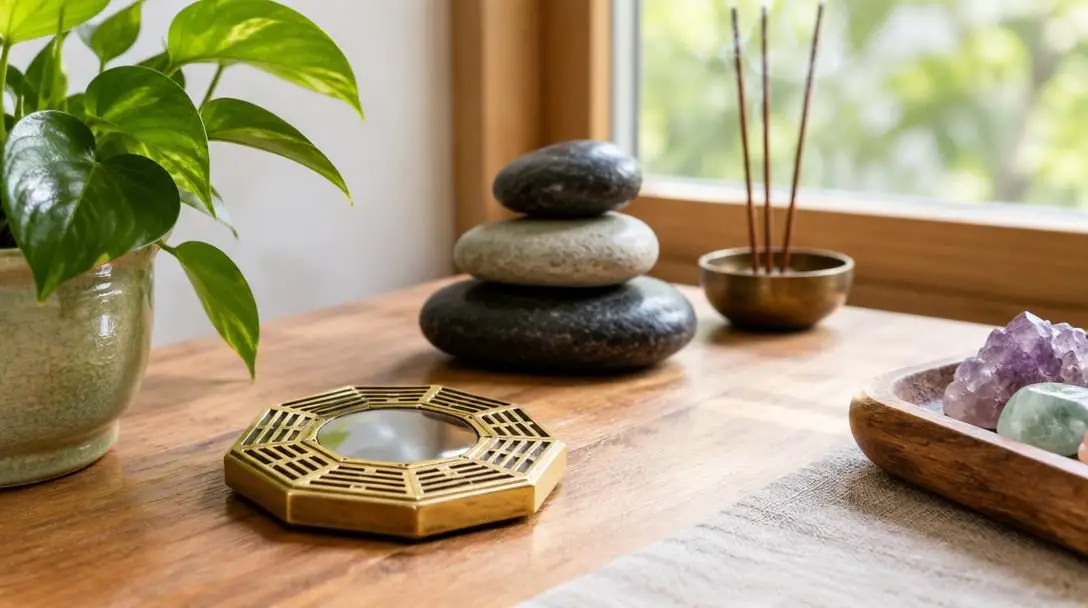
Alongside the Bagua and the duality of Yin and Yang, Feng Shui relies on five fundamental natural elements: Water, Wood, Fire, Earth, and Metal. Each element embodies distinct psychological and spatial qualities. An interior that highlights only one or two elements feels visually and energetically lopsided. A supportive home weaves all five together through materials, artwork, and physical shapes to sustain an uninterrupted cycle of renewal.
| Element | Key Qualities and Archetype | Representative Home Accents | Atmospheric Impact |
|---|---|---|---|
| Water | Flow, depth, stillness, resourcefulness | Fountains, ocean artwork, glass, mirrors | Calms racing thoughts and encourages introspection |
| Wood | Vitality, upward growth, flexibility | Live houseplants, botanical art, natural timber | Spurs creative drive, optimism, and continuous renewal |
| Fire | Warmth, visibility, enthusiasm, passion | Candles, warm-toned lighting, fireplaces | Invigorates social energy and enhances motivation |
| Earth | Grounding, nourishment, physical stability | Ceramics, pottery, stone surfaces, earth tones | Cultivates emotional patience and restorative comfort |
| Metal | Precision, clarity, structure, efficiency | Brass fixtures, steel shelving, circular decor | Sharpened mental focus and uncluttered organization |
Water
The Water element is associated with profound depth, adaptability, and smooth fluidity. It embodies the natural quality of water finding the path of least resistance without losing its momentum. In residential environments, incorporating water encourages calm, quiet reflection and resourcefulness. You can bring water into your decor through tabletop water fountains, reflective glass or mirrors, and framed artwork depicting rivers, lakes, or ocean scenes.
Wood
Wood stands for organic growth, physical vitality, upward expansion, and structural flexibility. Like a sapling reaching toward the sun, it supplies the energetic drive to start new projects, develop skills, and branch outward into new opportunities. Wood is naturally introduced into an interior through thriving live houseplants, vertical architectural lines, botanical textiles, and unfinished or polished timber furniture.
Fire
The Fire element embodies radiant warmth, expressive passion, visibility, and vibrant enthusiasm. It serves as an active catalyst, making it a critical element in communal living spaces where conversation, play, and celebration take place. Fire is introduced using natural candlelight, ambient fixtures with warm color temperatures, dedicated hearths, triangular decorative patterns, and accents in energetic tones like red and rich amber.
Earth
Earth embodies steady grounding, dependable nourishment, boundary-setting, and enduring patience. When household energy feels frenetic, chaotic, or unsettled, integrating the Earth element restores a reassuring sense of physical equilibrium. Earth can be integrated using ceramic vases, handmade clay pottery, untreated stone ornaments, landscape imagery, and textiles tinted in ochre, sand, or warm clay hues.
Metal
The Metal element provides crisp structure, sharp mental focus, immaculate clarity, and administrative efficiency. It represents the ability to pare away extraneous noise and concentrate on essential truths. Introducing metal into home offices, reading alcoves, and study areas sharpens intellect and reduces cognitive fatigue. It is easily featured through brass cabinet pulls, stainless steel desks, forged iron decor, and circular or spherical forms.
The Tangible Lifestyle Benefits of a Balanced Living Space
Aligning an interior living space with natural energy flow creates tangible improvements in your everyday lifestyle. When an environment transitions from visual clutter to mindful balance, the human nervous system responds with measurable ease. Practicing Feng Shui provides several distinct advantages for everyday well-being:
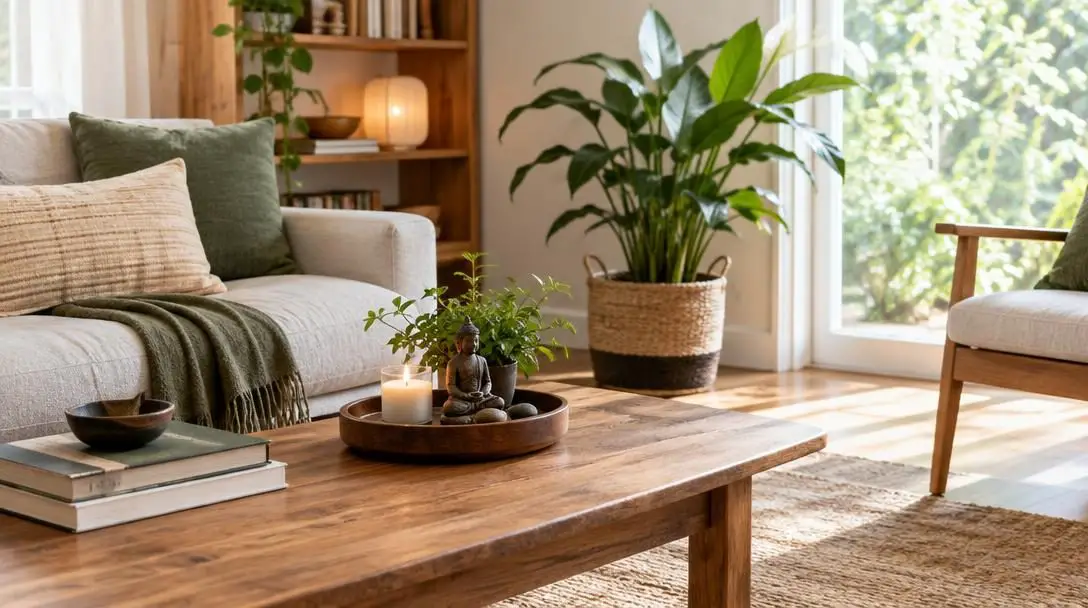
- Promotes relaxation and lowers chronic tension: Eliminating dense visual clutter and establishing clear paths removes continuous sensory overstimulation, transforming the home into a peaceful refuge from workplace pressures.
- Increases productivity and creative output: Deliberately staging work surfaces with supportive lighting, natural plant life, and clean sightlines improves sustained mental clarity and sparks fresh creative insights.
- Enhances restorative sleep: Prioritizing quiet Yin qualities within the bedroom fosters the physical calm and neurological ease needed for deep, uninterrupted rest, allowing you to awaken rejuvenated.
- Improves domestic relationships and social flow: Thoughtfully arranged living rooms that prioritize comfortable, open seating arrangements encourage warm conversation, active listening, and harmonious family interactions.
- Sustains baseline health and physical vitality: Breathing cleaner air, circulating unhindered natural light, and keeping structural flow open reduces daily friction, providing a dependable foundation for long-term health.
Step-by-Step: How to Apply Feng Shui to Your Living Space
You do not need to gut-renovate your house or hire an architectural team to incorporate the practical principles of Feng Shui. A methodical, phased approach allows you to adjust rooms comfortably at your own pace without feeling overwhelmed.
- Map your layout against the Bagua grid: Sketch an overhead diagram of your primary floor plan. Orient the baseline of the Bagua grid alongside the exterior wall containing your primary entrance door, then note which functional rooms align with sectors such as wealth, health, relationships, and career.
- Execute a thorough decluttering pass: Clutter functions as an energetic dam, trapping stale air, dust, and visual chaos. Methodically empty closets, clear off work surfaces, purge broken items, and assign every personal possession a clear, orderly storage home so energy can circulate without impediment.
- Calibrate Yin and Yang according to each room's function: Audit each room to align its atmosphere with its intended daily use. Rest zones, such as bedrooms, should prioritize soothing Yin energy with diffused lighting, thick drapery, and muted textiles. Social spaces, such as kitchens and living rooms, thrive with energetic Yang features, like natural sunlight and open movement pathways.
- Integrate the five elements with decorative intention: Walk room by room to ensure Water, Wood, Fire, Earth, and Metal are balanced. Correct absences by bringing in a houseplant for Wood, lighting a scented candle for Fire, or placing a glazed stoneware bowl for Earth.
- Apply color psychology and materials mindfully: Leverage color tones to adjust the mood of each living space. Use cooling blues and gentle sage greens to encourage quiet introspection and lower heart rates, while weaving warm reds, corals, or golden accents into dining areas and studios to encourage animated conversation and drive.
Common Mistakes That Disrupt Domestic Energy Flow
When applying energy principles at home, well-meaning newcomers often fall into subtle traps that inadvertently work against their goals. Avoiding these recurring missteps will keep your living environment balanced, practical, and functional:
- Neglecting the primary entrance: Piling up sports gear, damp coats, and unsorted mail at the front door constricts the primary threshold through which fresh energy reaches the home.
- Overcrowding rooms with symbolic trinkets: Purchasing mass-produced Feng Shui curiosities without organic intent turns rooms into cluttered curiosity shops, creating the very visual chaos you are trying to dissolve.
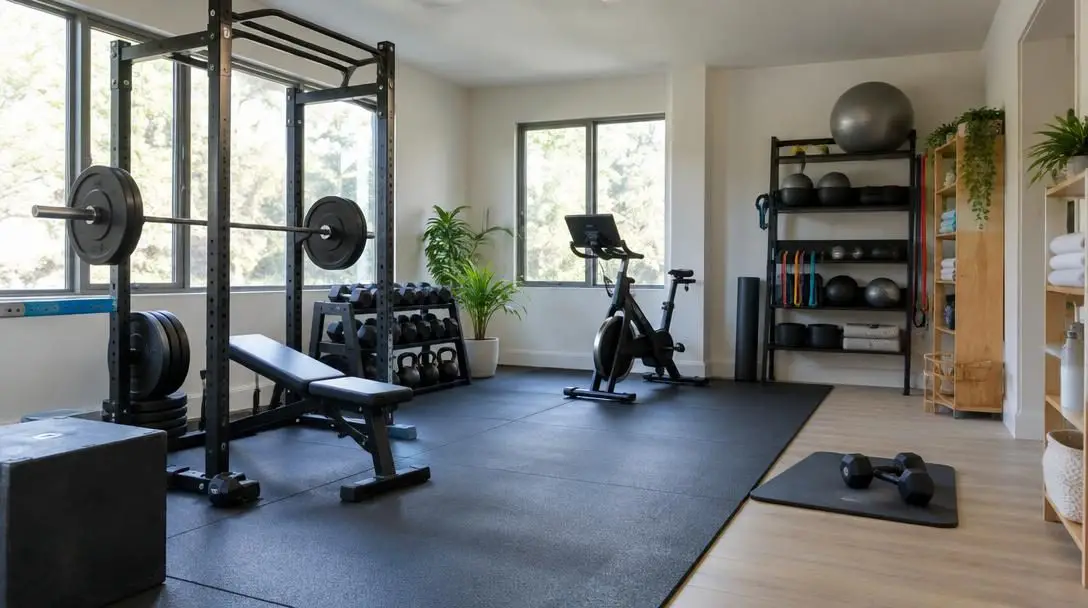
- Miscalibrating Yin and Yang energies: Placing stimulating workout machines or harsh blue computer screens right beside a sleeping mattress confuses the nervous system by demanding alertness in a space reserved for restorative rest.
- Overlooking everyday domestic repairs: Sticky latches, squeaky hinges, dripping faucets, and dead lightbulbs cause subtle friction throughout the day, slowly draining an otherwise well-composed environment.
- Prioritizing rigid spatial dogma over personal ease: Positioning furniture in awkward, inconvenient orientations merely to fulfill an abstract rule makes everyday living uncomfortable. Practical comfort must always guide theoretical layouts.
Dispelling Persistent Feng Shui Misconceptions
Despite centuries of practical application and widespread global interest, persistent myths often obscure how Feng Shui actually works. Clarifying these misunderstandings helps demystify the practice for modern homeowners and renters alike.
One widespread misconception is that Feng Shui is an esoteric religion or superstitious belief system. In reality, it is a structured, practical framework of environmental psychology and interior design. Rather than demanding adherence to a spiritual creed or belief in magical talismans, it offers a systematic approach to balancing light, ventilation, material choice, and spatial flow to maximize everyday well-being.
Another common belief is that harmonizing home energy requires substantial financial investment. Many people assume they need costly architectural modifications or expensive imported furnishings. In truth, the most transformative steps—such as opening heavy curtains, clearing out built-up closet clutter, repairing squeaking doors, and rearranging existing chairs for better conversation—cost nothing at all. While small decorative additions can help represent missing elements, major benefits can be unlocked on any budget.
Frequently asked questions
Does Feng Shui require buying specialized Chinese decorative items?
No. Feng Shui does not depend on specific cultural tokens or ornamental trinkets. Any well-made piece of modern furniture, framed print, ceramic vase, or native houseplant can represent the essential elements just as effectively as a traditional ornament.
How do I apply the Bagua map if my home has an irregular floor plan?
When working with L-shaped, narrow, or irregular floor plans, treat the perimeter of your home as a complete rectangle or square. Any areas that fall outside this boundary are considered missing extensions, which you can easily balance with mirrors, supplemental lighting, or targeted wall art.
Which single room should I focus on first when starting out?
Most practitioners recommend beginning with the primary bedroom, followed by the front entryway. The bedroom directly affects your nightly physiological recovery, while the entryway serves as the vital gateway where external energy enters the rest of your home.
Can clutter really have a measurable effect on my mental state?
Yes. Environmental psychology confirms what traditional practitioners have observed for thousands of years: dense visual clutter overtaxes cognitive processing, elevates chronic cortisol levels, and fuels subtle, persistent daily fatigue.
Do I have to strictly follow ancient layout rules if they feel impractical?
No. Personal comfort, ergonomic safety, and daily convenience must always take precedence over rigid dogmatic rules. A room that feels uncomfortable or awkward to navigate fails to achieve genuine balance, regardless of theoretical correctness.
The Bottom Line
Transforming your home using the energy principles of Feng Shui is not a one-time renovation, but an ongoing, intuitive practice of mindful living. As personal goals shift and seasons turn, your domestic needs will naturally change as well. By returning to the foundational balances of Yin and Yang, observing the natural circulation of the five elements, and keeping primary circulation pathways clear, you can design an environment that serves as an enduring sanctuary of health, clarity, and daily peace.