The Relevance Of Mythology In Modern Comics
Long before serialized comic strips filled modern newsstands or graphic novels lined bookstore shelves, ancient societies used sequential imagery, carved stone reliefs, and recited oral epics to communicate their most cherished legends. Graphic narrative is not an entirely modern phenomenon; rather, it represents the contemporary realization of humanity's oldest impulse to pair dramatic visual figures with grand moral storytelling. When early comic creators established their fictional universes, turning to the world of classical myth was a seamless continuation of this storytelling lineage.
Today, mythology remains an indispensable pillar of modern comics, lending narrative weight, psychological depth, and instant thematic recognition to illustrated pages. By translating ancient gods, enchanted artifacts, and monumental dilemmas into serialized adventures, graphic storytellers connect contemporary social concerns with age-old questions of duty, justice, and humanity.
Key takeaways
- Mythology supplies modern comic creators with durable archetypes, universal moral dilemmas, and rich world-building material.
- Sequential art pairs dialogue with visual symbolism to make ancient, larger-than-life concepts immediately accessible to contemporary audiences.
- Iconic superheroes like Wonder Woman and Thor directly adapt Greek and Norse traditions, while newer figures like Ms. Marvel draw upon broader global mythologies.
- Successful adaptations recontextualize mythic origins to explore modern ethical responsibilities rather than producing rigid, literal reproductions of ancient texts.
The Ancient Roots of Graphic Narrative
Comics have undergone remarkable technical and aesthetic shifts over the decades. The medium has adjusted to evolving four-color newsprint, sleek digital publishing platforms, complex panel layouts, and shifting societal tastes. Despite these sweeping transformations, the enduring bond between myth and graphic storytelling has remained a rock-solid foundation. Ancient civilizations consistently deployed visual sequences—from temple friezes in the Mediterranean to painted tomb chronicles in Egypt—to record their pantheons and pass down sacred lessons across generations.
When writers and illustrators first conceived modern comic book universes, drawing upon mythology was both an artistic choice and a practical narrative shortcut. Introducing an entirely new universe from scratch requires immense exposition. Mythology provides an established emotional shorthand. By weaving classical folklore into sequential art, comic creators anchor their speculative worlds in centuries of shared cultural memory, offering readers a welcoming sense of familiarity alongside breathtaking wonder.
How Mythological Archetypes Shape Modern Panels
Mythology supplies graphic literature with timeless themes and universal character templates that survive passing cultural fads. Core archetypes such as the chosen protector, the tragic monarch, the cunning trickster, and the sacrificial hero appear across nearly every global tradition. When comics integrate these archetypes, the motivations of costumed heroes and villains resonate deeply with readers regardless of cultural background or historical era.
Crucially, comic narratives rarely treat myth as static ornamental scenery. Instead, the medium leverages mythological frameworks to interrogate modern ethical conflicts. Writers place ancient moral dilemmas into contemporary settings, transforming mythological adaptations into active inquiries into authority, institutional power, compassion, and justice.
By incorporating mythological elements into their stories, comic book writers can create works that are both entertaining and thought-provoking, prompting audiences to reconsider how justice, authority, and compassion operate within society.
Visual storytelling serves as the catalyst that brings these abstract legends to life. Sequential art blends concise dialogue with expressive illustration, allowing artists to manifest the ethereal brilliance of divine realms, the tangible weight of legendary weaponry, and the terrifying scale of godlike power. A single panel can convey the awe of an immortal realm far faster than dense blocks of descriptive prose, granting classical folklore an immediacy tailored to modern audiences.
Prominent Mythological Figures in Mainstream Comics
The comic book medium contains several legendary characters whose foundational mythos, ongoing conflicts, and signature accoutrements are drawn straight from ancient traditions. The following comparison illustrates how different pantheons have been reimagined on the comic page:
| Character | Debuted | Creator(s) | Mythological Tradition | Key Themes and Motifs |
|---|---|---|---|---|
| Wonder Woman | 1941 | William Moulton Marston | Greek mythology | Divine intervention, heroic virtue, truth, and justice |
| Thor | 1962 | Stan Lee, Larry Lieber, Jack Kirby | Norse mythology | Honor, duty, destiny, sacrifice, and humility |
| Ms. Marvel | Modern era | Modern creative teams | Hindu mythology (power motifs) | Cultural identity, community, and transformation |
Wonder Woman
- Creator: William Moulton Marston
- Year Introduced: 1941
- Mythological Tradition: Greek mythology
- Signature Lore: Sculpted from clay by Athena; empowered by Zeus; wields the Lasso of Truth
Introduced in 1941 by William Moulton Marston, Wonder Woman represents one of the earliest and most direct fusions of Greek mythology and serialized comic narrative. Her classical backstory establishes that she was sculpted from clay by the goddess Athena and granted life directly by Zeus. In addition to her innate strength, she relies on mythic armaments inspired by ancient lore, most notably her Lasso of Truth, an enchanted implement that compels anyone bound within its coils to speak absolute truth. Marston used these Greek motifs to construct a character who reconciles classical notions of divine intervention with twentieth-century concepts of egalitarian justice, establishing an archetype of heroic virtue that continues to define graphic storytelling.
Thor
- Creators: Stan Lee, Larry Lieber, and Jack Kirby
- Year Introduced: 1962
- Mythological Tradition: Norse mythology
- Signature Lore: Exiled from Asgard to Earth to overcome personal arrogance
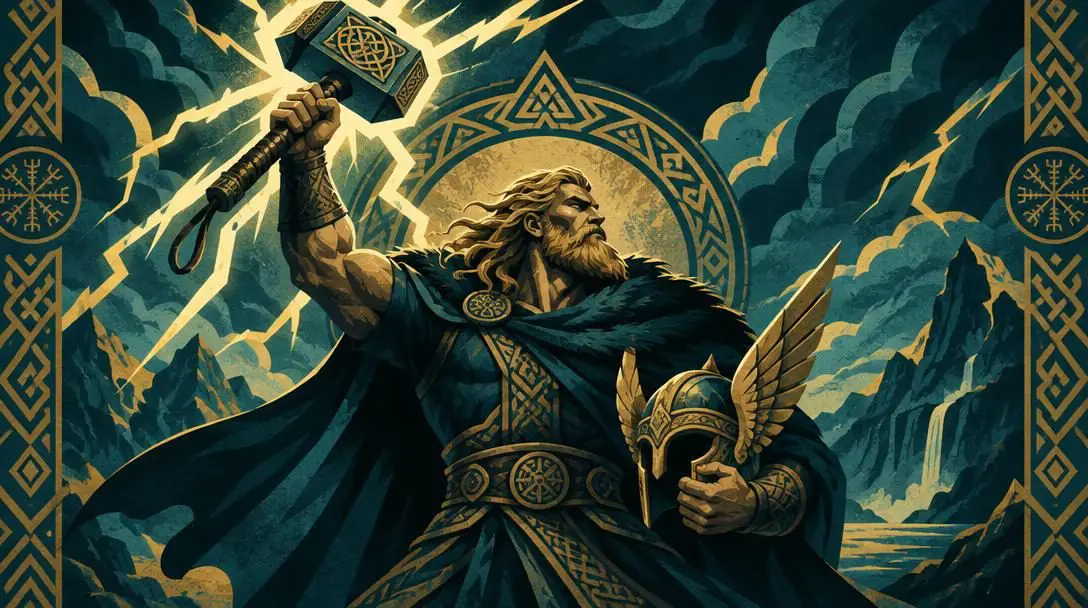
Conceived in 1962 by Stan Lee, Larry Lieber, and Jack Kirby, Thor adapts Norse mythology to explore heavy questions of responsibility, personal sacrifice, and cosmic duty. Rather than portraying the thunder god solely as an infallible celestial entity, his comic origins center on a vital lesson in humility: he is stripped of his divine privileges, cast out of Asgard (the realm of the gods), and compelled to live among mortal humans as retribution for his reckless arrogance. This dramatic fall forces Thor to develop genuine empathy and moral maturity. Lee, Lieber, and Kirby preserved the grand, tragic underpinnings of Norse lore while grounding the hero in an ongoing personal struggle between his godly inheritance and his obligation to protect humanity.
Ms. Marvel
- Civilian Identity: Kamala Khan
- Background: Muslim-American teenager
- Mythological Roots: Shape-shifting abilities inspired by Hindu mythology
- Power Origin: Terrigen Mist exposure
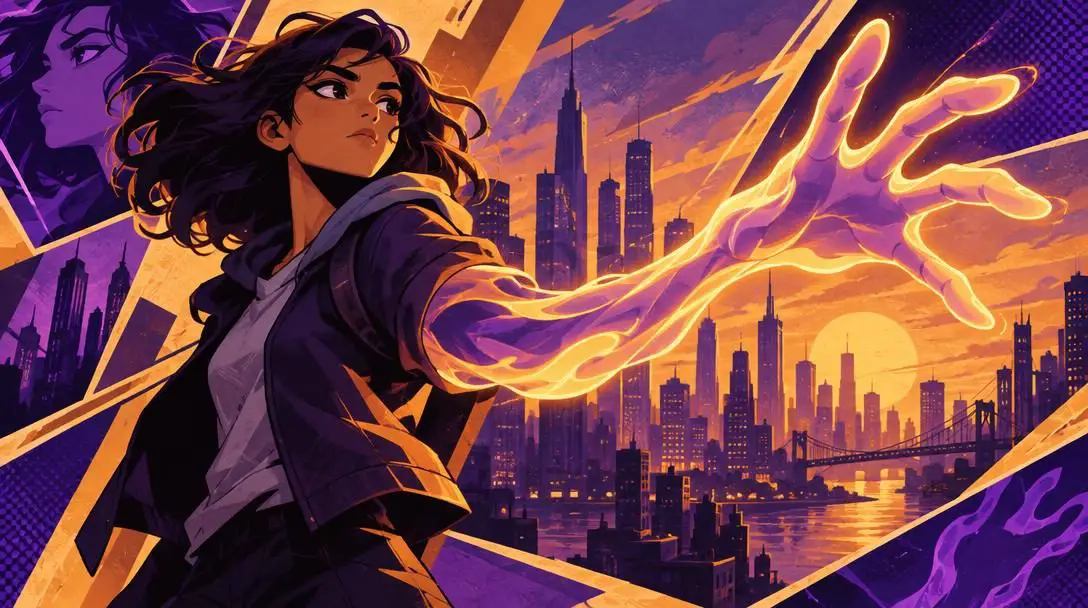
Modern comics continually push beyond Western classical pantheons, demonstrating that mythic frameworks remain vibrant when applied to contemporary communities. Kamala Khan, introduced as Ms. Marvel, is a Muslim-American teenager who gains metamorphic, shape-shifting abilities following exposure to Terrigen Mist. Her physical transformation draws inspiration from shape-shifting traditions present within Hindu mythology, melding folkloric concepts of bodily mutability with the emotional trials of modern adolescence. Ms. Marvel illustrates how twenty-first-century comic writing unites diverse cultural influences to produce heroes who mirror the multifaceted backgrounds of contemporary readers.
Step-by-Step Guide to Adapting Ancient Myths
Translating ancient folklore into sequential graphic art requires balancing fidelity to source material with creative reinvention. Writers and visual artists can follow a structured method to adapt ancient pantheons effectively:
- Identify the central archetype or theme. Determine the foundational concept the original tale communicates, whether focused on duty, destiny, hubris, or self-sacrifice. Clarifying this moral anchor preserves the thematic power of the story regardless of the setting.
- Isolate key lore and artifacts. Pinpoint the concrete relics, environments, or divine figures that will drive the plot forward. Identifiable components like enchanted lassos or divine realms establish an immediate tether to authentic mythological traditions.
- Establish the modern counterpart. Position the legendary character or concept within a modern environment to create vivid narrative contrast. Forcing an immortal or empowered being to navigate everyday human dilemmas emphasizes the tension between ancient destiny and contemporary reality.
- Reinterpret without direct duplication. Treat classical texts as creative launchpads rather than rigid scripts. Build original conflicts, complex personal relationships, and novel stakes that address issues facing modern society.
- Integrate visual symbolism. Convert the core qualities of the myth into memorable visual cues. Distinct costume silhouettes, signature items, and deliberate color choices communicate a hero's mythic origin instantly across the panel layout.
Frequent Missteps in Mythological Comic Writing
While ancient legends offer an abundant creative wellspring, integrating them into graphic literature presents distinct artistic pitfalls. Creators often undermine their own narratives by stumbling into predictable traps:
- Overly literal transcription: Sticking rigidly to ancient source texts leads to stiff, predictable pacing. Sequential graphic art requires fresh stakes and active character growth; merely illustrating ancient prose offers an academic exercise rather than a compelling comic.
- Disregarding character vulnerability: Depicting deities or mythic champions as omnipotent and emotionally untouchable destroys dramatic tension. Characters must retain relatable human flaws—such as arrogance, doubt, or conflicting loyalties—for readers to invest emotionally in their struggles.
- Superficial aesthetic borrowing: Co-opting names, costumes, or legendary titles without engaging their philosophical themes results in hollow characterization. Real narrative resonance requires understanding why these figures captured the imagination of ancient cultures in the first place.
- Overcomplicating the mythology: Historic pantheons are sprawling, convoluted, and frequently contradictory. Introducing intricate family trees, rival factions, and regional variations all at once clutters the narrative and obscures the protagonist's central arc.
- Ignoring cultural context: Borrowing folkloric motifs without researching their cultural and historical origins risks shallow or tone-deaf depictions. Nuanced research ensures respectful, authentic storytelling when handling diverse global mythologies.
The Evolution of Contemporary Mythmaking
As the comic medium continues to broaden across independent graphic memoirs, serialized mainstream universes, and digital webcomics, the practice of mythological adaptation is undergoing a profound evolution. Chief among these shifts is the long-overdue broadening of the mythological canon. Mainstream superhero publishing relied almost exclusively on Greek, Roman, and Norse traditions for decades. In recent years, creators have expanded their horizons to incorporate African, Asian, Middle Eastern, and Indigenous folklore, crafting narratives that reflect an interconnected, multicultural readership.
Simultaneously, contemporary comic writing increasingly interrogates traditional mythic morals. Classical myths frequently portrayed deities as capricious, cruel, and indifferent to mortal suffering. Modern sequential writers critique these archaic behaviors, challenging notions of unchecked power and evaluating the social accountability of extraordinary individuals. Superheroes are held to modern standards of ethics, compassion, and civic duty, prompting audiences to question how authority ought to be exercised in the real world.
In this manner, modern superhero stories have effectively become the living mythology of our time. Just as ancient communities gathered to hear poets recount the exploits of heroic figures facing impossible trials, contemporary readers turn to comic pages to witness modern champions wrestle with the perpetual challenges of human existence.
Frequently asked questions
Why do comic creators frequently turn to mythology instead of inventing entirely original lore?
Mythology provides time-tested archetypes, universal moral dilemmas, and an immediate sense of wonder. Using these ancient traditions provides an emotional shorthand that helps readers connect with complex narratives without needing extensive background exposition.
How does Wonder Woman's origin story connect to Greek mythology?
Wonder Woman was sculpted from clay by the goddess Athena and granted life by Zeus, a classic origin conceived by William Moulton Marston in 1941. She also utilizes mythic tools such as the Lasso of Truth, which forces captive subjects to speak the truth.
What mythic tradition inspired the creation of Thor in mainstream comics?
Thor is rooted in Norse mythology. Created in 1962 by Stan Lee, Larry Lieber, and Jack Kirby, his narrative focuses on his banishment from Asgard to Earth, where he is forced to learn humility and empathy after displaying reckless arrogance.
In what ways does Ms. Marvel draw upon mythological roots?
Kamala Khan, a Muslim-American teenager who acquires powers after exposure to Terrigen Mist, exhibits shape-shifting abilities inspired by motifs in Hindu mythology. Her character demonstrates how modern comics blend diverse cultural traditions into contemporary superhero storytelling.
What is the most common mistake writers make when adapting ancient folklore into comics?
One of the most frequent missteps is overly literal transcription—reproducing historical stories word-for-word rather than reinterpreting the material. Without original conflicts, vulnerable character arcs, and modern thematic stakes, the resulting story feels like a history lecture rather than an engaging narrative.
The bottom line
The enduring relevance of mythology in modern comics highlights the continuous nature of human storytelling. By reinterpreting ancient deities, mystical artifacts, and moral parables for contemporary audiences, comic writers and visual artists keep timeless wisdom alive. Far from being simple escapist adventures, modern comics serve as dynamic spaces where antique folklore and modern ethical dilemmas meet, proving that while our societies, publishing platforms, and artistic styles evolve, the fundamental power of myth remains unchanged.