The Three-Step Process to Fix Any Car Problem

Car trouble is widely recognized as one of the most frustrating experiences a driver can face. Modern vehicles are extraordinarily complicated machines, packed with complex mechanical systems, miles of electrical wiring, and sophisticated computer controls. When something goes wrong under the hood, diagnosing the malfunction often feels insurmountable to everyday drivers who lack formal automotive training.
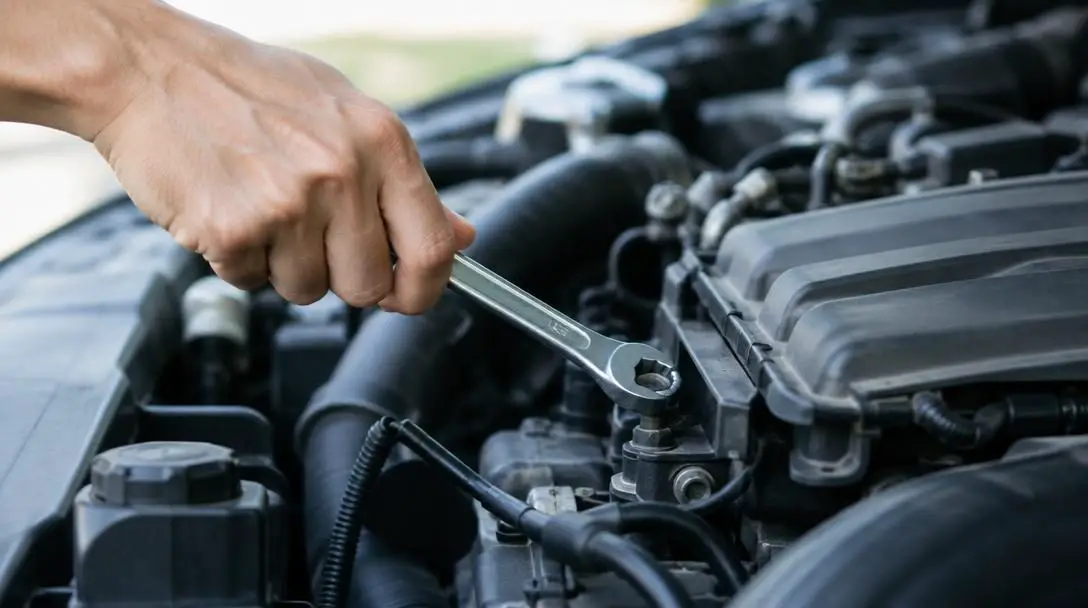
Despite the intimidating nature of modern automotive engineering, diagnosing engine problems is far simpler than it first appears. Beneath the computer chips, sensors, and intricate wiring harnesses, internal combustion engines still operate on straightforward mechanical and chemical rules. By cutting through the noise and focusing on core requirements, the vast majority of engine troubleshooting can be reduced to three fundamental steps: checking spark, air, and fuel.
Key takeaways
- Engine troubleshooting can be streamlined by checking the three core requirements of internal combustion: spark, air, and fuel.
- A healthy car battery should read at least 12 volts while the engine is off and approximately 14 volts while running.
- Air intake restrictions rarely prevent an engine from starting, manifesting instead as jerking, hesitation, or stalling while driving.
- If a vehicle has a confirmed healthy battery but still refuses to start, fuel delivery failure is the most probable culprit.
- Drivers can use free tool-lending programs and diagnostic scanning services at local auto parts stores to verify issues before buying parts.
The fundamentals of internal combustion
To understand why car troubleshooting can be organized into three distinct steps, it is essential to look at how an engine actually generates power. An internal combustion engine relies on a continuous, controlled chemical reaction inside its cylinders. For that reaction to take place, the engine must receive three critical components simultaneously: an electrical spark, incoming air, and combustible fuel.
The first requirement is the spark. Combustion engines rely on electricity to initiate the burning process within each combustion chamber. When electrical current flows properly from the battery and alternator through the ignition system, the spark plugs fire at precise intervals. This controlled electric arc ignites the compressed air-fuel mixture, forcing the piston down and driving the engine's mechanical movement.
The second requirement is air. Fire cannot exist without oxygen, and your engine draws in vast amounts of ambient air to supply the necessary oxygen for burning fuel. The vehicle must be able to pull in this air cleanly and accurately measure the volume of air entering the intake system so the engine management computer can calculate the proper operating conditions.
The third requirement is fuel. Liquid fuel must be drawn from the storage tank, filtered of debris, pressurized, and delivered directly to the engine's cylinders in controlled quantities. When the correct ratio of air and fuel is met by an electrical spark at precisely the right moment, clean combustion occurs, generating the power required to propel the car smoothly.
Underneath all the computer chips and sensors, internal combustion engines still operate on straightforward mechanical and chemical rules.
Step 1: Diagnosing spark and the electrical system
Because the first thing a combustion engine needs to run is spark, troubleshooting begins with the vehicle's electrical flow. When an engine suffers from an electrical delivery problem, the malfunction usually reveals itself in one of two distinct manners: either the car will not start at all, or the driver will experience a consistent shimmy while the engine is running because one or more spark plugs are failing to fire correctly. Both scenarios point directly to an issue with electrical supply or delivery.
Pinning down the flow of electricity across the engine requires an inexpensive tool known as a digital multimeter, which can be purchased from any hardware store or large retailer like Walmart. With this tool in hand, testing can be performed rapidly.
The first component to evaluate is the vehicle's battery. Set the multimeter to measure direct current voltage (DCV), then place the meter probes across the positive and negative battery terminals to read the baseline voltage while the engine is completely switched off. A healthy battery needs to read at least 12V, with a reading between 13V and 14V serving as a much better sign of strong battery health. If the reading drops below 12V, the vehicle will not start for most automotive models.
If the battery tests within the healthy range, the car should start. When a vehicle starts up successfully, perform a secondary check with the engine running. Once again, measure the voltage across the battery terminals. In a running vehicle, the meter should show at least 12V, and a reading of roughly 14V is a normal indication that the electrical system is charging properly and that there are no major electrical problems across the whole engine.
If the battery is fully functional and supplies adequate voltage, but the car still refuses to start, the issue is very likely not an electrical supply problem. In that situation, you should move past the ignition system and evaluate the remaining components of the combustion process. However, if the car does successfully start but you notice a distinct, persistent shimmy, the spark plugs themselves must be tested individually, as a malfunctioning plug will cause misfires across individual cylinders.
Step 2: Checking the air intake and sensor systems
The second essential element an engine needs to run is air, which supplies the vital oxygen required for combustion. Unlike fuel or electrical current, air is readily available in the surrounding environment, and there is naturally air inside your engine at any given moment. Because air is omnipresent, airflow problems will almost never prevent an engine from starting up entirely.
Instead of causing a complete no-start condition, airflow restrictions or measurement errors typically manifest while driving. The most frequent symptoms include noticeable jerking motions, hesitant acceleration when pressing the gas pedal, and unexpected engine stalling. When these symptoms appear, the intake system must be assessed.
Evaluating engine airflow requires a method to measure intake flow rates and air pressures. Fortunately, modern vehicles come equipped with a built-in diagnostic component designed specifically for this purpose: the Mass Airflow (MAF) sensor. The MAF sensor tracks the volume of incoming air and communicates these readings directly to the vehicle's central computer.
Diagnosing an airflow concern involves inspecting and testing this vital component through two primary methods:
- Multimeter testing: The MAF sensor can be tested directly for electrical functionality using your multimeter to ensure it is receiving power and sending appropriate voltage signals back to the computer.
- OBDII code scanning: When an active airflow problem occurs, a working MAF sensor will detect the discrepancy and report the issue to the vehicle's computer. These logged computer faults can be read using an On-Board Diagnostics (OBDII) scanner.
Step 3: Verifying fuel delivery and line pressure
The final pillar of engine operation is fuel. If your car refuses to start despite having a verified, healthy battery that provides full electrical power, the engine is not getting fuel in the vast majority of cases. Without gasoline or diesel reaching the cylinders, combustion is physically impossible.
When investigating a total starting failure related to fuel delivery, three primary culprits should be considered:
- An empty fuel tank: The fuel level may simply be too low to draw liquid into the fuel pickup lines.
- A clogged fuel filter: Debris and contaminants can accumulate in the filter over time, completely choking off the flow of fuel before it reaches the engine.
- A dead fuel pump: The mechanical or electrical pump responsible for pulling fuel from the tank and pushing it forward may have stopped operating altogether.
Pinpointing which of these three components has failed allows you to identify the exact repair needed to get the engine running again. However, fuel issues do not always present as an absolute failure to start. If the vehicle starts up but subsequently stalls, displays sluggish power output, or suffers from severe responsiveness issues—and you have already confirmed that the airflow system is operating normally—you may be dealing with improper fuel flow or pressure.

Testing for fuel pressure requires a dedicated automotive fuel pressure gauge. Rather than purchasing one outright, drivers can borrow a pressure gauge from auto parts stores like AutoZone, which offer tool-lending programs that simply require a temporary deposit. Connecting this gauge to the fuel rail allows you to verify whether fuel is arriving at the correct pressure specifications dictated by the manufacturer.
Comparing combustion systems at a glance
Diagnosing engine faults requires matching the vehicle's behavior to the system most likely responsible. The table below outlines how each of the three combustion pillars manifests problems and how they can be evaluated.
| System | Primary Symptoms | Diagnostic Tool | Common Failure Points |
|---|---|---|---|
| Spark and Electrical | Engine will not start; persistent running shimmy | Digital multimeter | Discharged battery, charging system, worn spark plugs |
| Air Intake | Hesitant acceleration, jerking motions, stalling | OBDII scanner, multimeter | Mass Airflow (MAF) sensor, intake restrictions |
| Fuel Delivery | Cranks but will not start; sluggish power output | Fuel pressure gauge | Empty tank, clogged fuel filter, dead fuel pump |
A step-by-step diagnostic workflow for drivers
Approaching car problems systematically saves time, reduces frustration, and prevents unnecessary parts replacement. When your vehicle begins acting up, following a structured workflow helps narrow down the culprit quickly.
- Assess the primary symptom: Determine whether your vehicle is experiencing a complete no-start condition or if it starts up but runs with shimmies, hesitations, or poor responsiveness.
- Inspect the battery first: Grab your multimeter, test the resting battery voltage, and confirm it reads at least 12V. If it does not, address the discharged battery before attempting further diagnostics.
- Evaluate the starting behavior: If the battery reads 13V to 14V and the car still will not turn over or fire, eliminate spark as the primary suspect and focus immediately on fuel delivery.
- Check the fuel fundamentals: Confirm that the gas tank contains fuel, verify that the fuel pump engages, and inspect the fuel filter for blockages. Use a borrowed pressure gauge on the fuel rail to measure fuel delivery if the car starts but lacks power.
- Examine the air system during rough running: If the car starts but stumbles, jerks during acceleration, or stalls, turn your attention to the air intake. Test the MAF sensor using your multimeter or pull error codes with an OBDII scanner at an auto parts store.
- Address spark plug misfires: If the car runs but displays a distinct, steady engine shimmy, remove and test the spark plugs to identify which cylinder is failing to ignite properly.
Common troubleshooting mistakes to avoid
When confronting engine problems, it is easy to make assumptions that lead to wasted time and unnecessary expenses. Avoiding several frequent diagnostic pitfalls will help keep your repair efforts on track.
- Assuming airflow causes a no-start: Because ambient air is naturally present within an engine, an airflow restriction or faulty MAF sensor rarely keeps a car from firing up completely. Spending hours searching for air leaks when a vehicle will not turn over distracts from the real culprits: missing spark or lack of fuel.
- Replacing parts before checking electrical health: Purchasing a new starter motor or alternator without first testing the battery voltage with a multimeter often results in frustration. A battery reading under 12V can cause widespread starting failures, and replacing surrounding components will not solve the underlying low-voltage issue.
- Overlooking single causes for multiple symptoms: A weak fuel pump might allow a car to idle quietly but starve the engine during acceleration, leading an owner to misdiagnose the issue as an air intake problem. Always verify your fuel delivery pressure using an appropriate gauge before ruling out fuel starvation.
When to handle repairs yourself versus calling a mechanic
Once you have methodically evaluated the spark, air, and fuel systems, you will have a clear picture of what is preventing your engine from operating smoothly. Armed with this diagnostic information, you can decide whether the resulting repair is something you can tackle yourself or if professional intervention is required.
Many of the common fixes uncovered by this three-step process are well within the reach of a DIY mechanic. Installing a fresh battery, replacing worn spark plugs, cleaning or swapping out a Mass Airflow sensor, and replacing an accessible inline fuel filter are common maintenance tasks that require standard hand tools. Using free diagnostic scanning services at local auto parts stores can confirm your findings and provide the exact part numbers needed for the job.
However, if your diagnosis reveals a dead fuel pump inside the gas tank, complex electrical harness damage, or persistent misfires despite functional spark plugs and adequate fuel pressure, hiring a professional mechanic is often the safest and most efficient path forward. Even if you choose to have a repair shop complete the work, following these three diagnostic steps guarantees that you understand the root cause of the problem, allowing you to communicate clearly with your technician and avoid paying for unnecessary repairs.
Frequently asked questions
Can a dirty air filter prevent an engine from starting?
No, airflow problems will almost never prevent an engine from starting up entirely. Because ambient air is naturally present inside the intake and engine cylinders, a car will still start even with restricted airflow, though it may jerk, hesitate, or stall while driving.
What reading should I see on a multimeter for a healthy car battery?
A healthy resting battery should read at least 12 volts with the engine off, with readings between 13 and 14 volts indicating optimal battery health. While the engine is running, the multimeter should show roughly 14 volts, indicating that the charging system is functioning properly.
What causes a car to crank normally but refuse to start?
If the battery provides adequate power and the starter turns the engine over, the failure to start is almost always caused by a lack of fuel. The three primary causes are an empty gas tank, a clogged fuel filter, or a failed fuel pump.
How can I test fuel pressure without buying expensive tools?
Drivers can borrow an automotive fuel pressure gauge from auto parts stores like AutoZone through their tool-lending programs, which require only a temporary deposit that is refunded upon returning the tool.
What does a steady engine shimmy while driving indicate?
A persistent, steady engine shimmy or shaking sensation typically indicates that one or more spark plugs are not firing correctly, resulting in an active misfire in one of the engine cylinders.
The bottom line
Modern automobiles may be loaded with electronics and sensors, but the mechanical heart of an internal combustion engine has not changed. An engine requires only three things to run: an electric spark, clean air, and pressurized fuel. By acquiring a basic multimeter, paying attention to your car's symptoms, and testing spark, air, and fuel in sequence, you can cut through the complexity of automotive repair and diagnose almost any running or starting issue with confidence.