4 Ways to Keep Insects Away and Keep Pets Safe

Protecting a living space from unwanted insect invasions is a seasonal reality for most households, particularly during the warmer months when pests reach their peak activity. Biting nuisances such as mosquitoes, flies, ants, cockroaches, and fleas cause persistent discomfort for people, but they also severely agitate domestic pets. Unfortunately, the standard methods humans use to eliminate or repel household bugs frequently expose dogs, cats, and other domestic animals to severe health hazards that many pet parents fail to recognize until an emergency occurs.
Organizations such as the American Society for the Prevention of Cruelty to Animals emphasize that companion animals are uniquely sensitive to everyday insecticides and chemical bug repellents. Because dogs and cats interact with their environment using their noses, paws, and mouths, any chemical residues lingering on baseboards, lawns, or furniture quickly enter their systems. Exploring pet-friendly pest deterrence empowers homeowners to build effective barriers against stubborn bugs without endangering the health of four-legged family members.
Key takeaways
- Conventional repellents containing DEET or Borax pose life-threatening neurological and organ risks to domestic animals.
- Pet-safe pest deterrence disrupts insect sensory receptors or employs mechanical dehydration instead of synthetic neurotoxins.
- Boiled citrus sprays, strategically placed botanicals, and Diatomaceous Earth offer natural protection against biting insects.
- Grooming behaviors cause animals to ingest topical residues, making non-toxic household audits vital for pet safety.
- Consulting a veterinarian ensures pest control methods are tailored safely to your pet's specific biological needs.
The Hidden Dangers of Conventional Pest Control
The standard commercial pest control market relies heavily on synthetic chemicals designed to incapacitate insect nervous systems. A prime offender found in standard insect sprays is N,N-diethyl-meta-toluamide, universally known as DEET. While humans routinely apply DEET to skin and fabrics, domestic pets process this chemical very differently. In dogs and cats, exposure to DEET can induce tremors, seizures, and severe neurological conditions that can easily become fatal if left untreated.
Pets face distinct biological risks due to their grooming rituals and physical stature. While an adult human rarely ingests substances sprayed on their limbs or furniture, domestic animals explore their surroundings by sniffing close to the ground, padding across treated rugs, and immediately licking their paws and fur clean. This natural behavior guarantees that any chemical deposited onto household surfaces will be ingested orally. Furthermore, the significantly smaller body mass of cats and dogs amplifies the toxic effect of small chemical doses, meaning a concentration that merely irritates an adult human can rapidly overwhelm a small pet's internal organs.
Similarly deceptive are common home remedies such as Borax, also known as sodium borate, sodium tetraborate, or disodium tetraborate. Frequently recommended in rural and urban households alike as a DIY ant remedy when mixed with powdered sugar, Borax targets carpenter ants and roaches effectively. However, the sweet mixture attracts pets just as easily as insects. Ingesting this white powder produces acute gastrointestinal distress and serious kidney damage in cats and dogs. Effective pest management must discard these hazardous poisons in favor of methods that target insect weaknesses without poisoning mammals.
Chemical efficacy should never take precedence over the health and safety of four-legged companions living in your home.
Four Proven, Pet-Safe Ways to Deter Insects
Sustainable, animal-friendly bug management swaps out chemical neurotoxins for sensory confusion, natural botanical aversions, and mechanical desiccation. The following four non-toxic methods establish reliable defensive layers around living spaces while preserving the health of pets.
| Deterrent Method | Primary Targets | Mode of Action | Safe Application Zones |
|---|---|---|---|
| Fresh Citrus Sprays | Mosquitoes, biting flies | Olfactory and gustatory masking | Pet fur coats, outdoor perimeters, human skin |
| Botanical Herb Plantings | Mosquitoes, garden pests, varmints | Natural aromatic barriers | Patios, decks, entryways, vegetable plots |
| Diatomaceous Earth | Fleas, bedbugs, roaches, ants | Mechanical lipid absorption and desiccation | Carpets, baseboards, cracks, pet fur |
| Sound Devices & Barriers | Mosquitoes, migrating perimeter pests | Frequency deterrents and barrier lines | Yard borders, indoor rooms, fence lines |
Fresh Citrus Sprays

- Target Pests: Mosquitoes, gnats, and biting flies
- Active Component: Natural citrus juices and boiled rinds
- Mechanism: Sensory receptor interference
- Pet Safety Profile: Non-toxic topical and perimeter application
Mosquitoes and biting flies rely on highly sensitive chemical receptors to detect the carbon dioxide plumes, ambient heat, and skin secretions emitted by warm-blooded mammals. Citrus deterrents exploit this sensory system through olfactory and gustatory disruption. Insects find the natural aroma and bitter taste of concentrated citrus deeply repellent. When citrus oils and juices coat a surface or linger in the air, they mask the biological cues that biting bugs use to locate their prey, driving them away without introducing dangerous synthetic vapors into the household environment.
Making a safe citrus spray at home is straightforward and cost-effective. By slicing whole citrus fruits and steeping them in boiling water, homeowners can create an effective liquid deterrent that can be misted safely over patio furniture, entry points, and outdoor perimeters. For direct pet relief during high-mosquito periods, a gentle spritz of strained citrus water across the dog or cat's coat deters insects from landing. For personal human protection, rubbing fresh juice from a sliced lemon onto exposed skin provides a clean, chemical-free shield against insect bites.

Pest-Deterring Plants and Herbs

- Target Pests: Garden varmints, vegetable pests, and flying insects
- Key Plant Varieties: Citronella Grass, Rosemary, Basil, Mint, Lavender
- Mechanism: Botanical aromatic defense
- Placement: Porches, patios, decks, and garden beds
In nature, many botanical species develop aromatic essential compounds specifically to stop herbivorous pests from eating their leaves or nesting nearby. By grouping these defensive plants in living containers, homeowners can construct a natural perimeter that flying bugs refuse to breach. While humans appreciate the refreshing herbal scents and pets enjoy the green surroundings, biting flies and mosquitoes actively avoid crossing these botanical barriers.
A diverse arrangement of strategically selected flora provides continuous protection throughout the warm season. Consider incorporating the following varieties around your property:
- Citronella Grass: A well-known natural bug repellent that casts a strong aromatic aura over outdoor seating areas.
- Rosemary and Lavender: Sturdy, pleasant herbs whose fragrant foliage discourages flying pests while adding color to decks.
- Basil and Mint: Quick-growing culinary herbs that safeguard vegetable beds against invasive bugs and unwanted varmints.
- Catnip and Lemon Balm: Vigorous perennial herbs that pests despise, offering pet-friendly interest in safe container groupings.
- Sage, Allium, Marigolds, and Bee Balm: Colorful flowering additions that deter pests from entering garden borders and outdoor living spaces.
Diatomaceous Earth

- Target Pests: Fleas, bedbugs, roaches, and carpenter ants
- Composition: Milled fossilized microscopic aquatic organisms
- Mechanism: Physical exoskeleton abrasion and desiccation
- Toxicity Level: Zero synthetic chemical toxicity
Unlike conventional nerve-agent bug powders, Diatomaceous Earth functions via a completely mechanical mode of action. Derived from the fossilized remains of microscopic, aquatic single-celled algae known as diatoms, this fine, chalky powder feels smooth to the human hand but behaves like microscopic razor wire against insects. As crawling pests such as fleas, bedbugs, ants, and roaches walk across the powder, the abrasive particles absorb the protective, waxy lipid layer coating their exoskeletons.
Without this moisture-retaining lipid barrier, the insects rapidly dehydrate and die within hours of contact. Because Diatomaceous Earth acts mechanically rather than chemically, pests cannot build an immune resistance to it over time. Property owners can sprinkle the powder along indoor baseboards, under major appliances, inside wall cracks, and directly across outdoor pathways where crawling bugs travel. Because it is non-toxic to mammals, the powder can also be applied directly onto a pet's fur to safely eliminate fleas without the risks associated with chemical spot treatments.
Ultrasonic Sound Devices and Perimeter Barriers
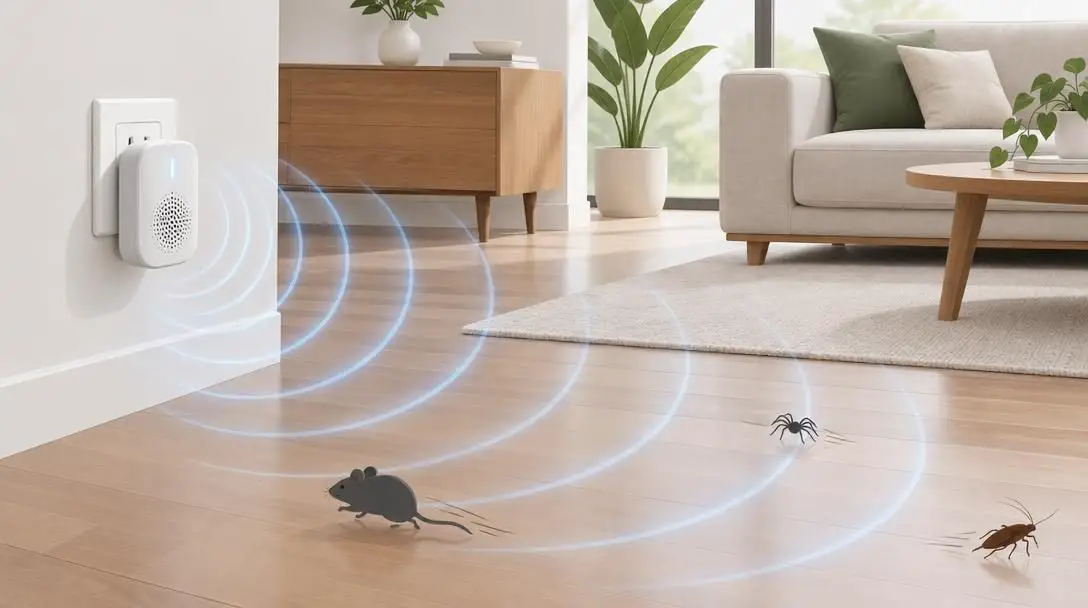
- Target Pests: Migrating yard insects and biting pests
- Operating Mode: High-frequency sound emissions and liquid yard barriers
- Safety Profile: Completely chemical-free indoor and outdoor deterrence
- Deployment Area: Yard fence lines, entry hallways, and room perimeters
For homeowners who want to keep insect populations down without spraying airborne particles inside the house, sound devices offer a non-invasive solution. These electronic deterrents emit specific acoustic frequencies designed to irritate and disperse pests while remaining outside the normal range of household pets. By setting up sound devices near common pest thoroughfares, homeowners can reduce indoor bug activity without introducing synthetic fumes into rooms where pets sleep.
Complementing sound defenses with outdoor perimeter barriers keeps migrating pests from reaching the home in the first place. Applying pet-safe citrus-based sprays along the outer perimeter of a yard creates an invisible sensory boundary that discourages pests from migrating across property lines. Combining mechanical frequencies with topical botanical perimeters forms a layered defense that keeps pests out without exposing companion animals to chemical risks.
Practical Implementation: Step-by-Step Defense
Transforming your home and yard into an insect-resistant, pet-safe sanctuary requires a systematic approach. Follow these structured steps to put your defenses in place:

- Prepare your homemade citrus spray: Roughly chop fresh citrus fruits, place them into a pot of water, and bring the mixture to a rolling boil. Turn off the heat and let the fruit steep in the hot water for at least one full hour. After the mixture cools completely, strain the liquid through a fine mesh sieve into a clean spray bottle.
- Audit indoor spaces for toxic chemicals: Inspect the spaces beneath your kitchen sink, inside pantries, and behind laundry units. Identify and safely discard all bug powders or traps containing Borax, sodium borate, sodium tetraborate, or disodium tetraborate, especially sweet ant baits that could attract curious pets.
- Plant protective botanical clusters: Position potted containers of citronella grass, rosemary, lavender, and catnip across high-traffic pet zones like decks, porches, and patio doors. If you maintain outdoor vegetable plots, interplant rows of basil, marigolds, and mint to keep damaging insects away from your crops naturally.
- Apply mechanical powders to travel pathways: Dust a thin, even layer of Diatomaceous Earth along floor baseboards, under kitchen appliances, and along exterior foundation cracks. If fleas are an issue, work a small amount into your pet's coat down to the skin, taking care to avoid their eyes and nostrils.
- Establish perimeter and sound defenses: Install ultrasonic sound devices in rooms where flying insects gather. Finally, spray your prepared citrus solution along outdoor fence lines and property borders to turn back incoming bugs before they reach your porch.
Critical Mistakes to Avoid in Pet Households
Most pet poisonings from insect products do not happen out of neglect, but because of common misunderstandings about what is safe for animals. Avoiding these frequent missteps protects your household from unexpected emergencies:
- Assuming natural remedies are always pet-safe: A widespread myth suggests that any non-commercial or kitchen-made concoction is harmless to pets. In reality, many plants, concentrated essential oils, and pantry ingredients are toxic to mammalian nervous systems and livers. Always research individual ingredients before using homemade pest remedies around animals.
- Using Borax and sugar ant traps: Mixing confectioners' sugar with Borax remains a popular DIY carpenter ant remedy, but it is dangerous to pets. Dogs and cats are drawn to the sweet scent, and eating sodium tetraborate leads to severe gastrointestinal upset and acute kidney damage.
- Spraying DEET repellents in pet-inhabited areas: Never spray human insect repellents inside an enclosed room where domestic animals breathe, and do not pet your dog or cat after applying DEET to your hands. Accidental ingestion during regular grooming can lead to seizures and life-threatening neurological distress.
- Choosing chemical strength over pet safety: Homeowners often grab commercial insecticides simply because they deliver fast, visible results. However, rapid knockdown power usually comes from neurotoxins that endanger pets. Pest management must prioritize your animal's long-term health over immediate chemical knockdown.
What to Consider Next
Maintaining a safe, bug-free living space is an ongoing process that evolves with the seasons. As temperatures shift and insect activity peaks, consider these four proactive measures:
First, schedule a dedicated consultation with your veterinarian. Because dogs and cats possess distinct metabolic rates, underlying conditions, and physiological sensitivities, professional veterinary guidance ensures your pest control strategy matches your pet's needs. A veterinarian can evaluate your pet's lifestyle, breed, and health history to recommend the safest parasite prevention products.
Second, take a walking tour of your outdoor yard and patio areas. Look for damp corners, standing puddles, or unplanted containers where mosquitoes breed and congregate. Introduce container herbs such as lemon balm, rosemary, and citronella grass onto porches and decks to fill open spaces with pet-safe insect deterrents.
Third, review every pest control product stored inside your home. Check ingredient panels on ant baits, roach hotels, and bug sprays in your garage, basement, and kitchen cabinets. Replace any items containing Borax or chemical neurotoxins with pet-friendly alternatives like Diatomaceous Earth.
Finally, evaluate non-chemical physical barriers. Inspect window screens for small tears, seal baseboard gaps with pet-safe caulk, and try ultrasonic sound repellers in open rooms. Pairing physical exclusion with natural deterrents keeps pests out while keeping your pets safe.
Frequently asked questions
Is DEET bug spray ever safe to apply directly onto dogs or cats?
No, DEET should never be applied to pets. The chemical causes severe neurological issues in domestic animals, including tremors, seizures, and potentially fatal toxicity. Pets also groom themselves, meaning any spray on their coat is directly ingested.
How does Diatomaceous Earth kill pests without using chemicals?
Diatomaceous Earth is made of finely milled, fossilized aquatic diatoms that work mechanically. The microscopic particles scratch and absorb the protective waxy outer coating of an insect's exoskeleton, causing pests like fleas and roaches to dehydrate and die without any chemical neurotoxins.
Can I safely use Borax mixed with sugar to kill carpenter ants if I have pets?
No, Borax and related compounds like sodium tetraborate should not be used in homes with pets. The sweet sugar attracts cats and dogs just as easily as ants, and ingesting the powder causes severe stomach issues and kidney damage in companion animals.
Which garden plants naturally repel insects while remaining safe around pets?
Plants such as citronella grass, rosemary, basil, lavender, mint, catnip, lemon balm, sage, bee balm, and marigolds naturally deter mosquitoes and garden pests through their aromatic foliage without introducing dangerous chemical poisons into your yard.
How do I make a pet-safe insect spray using fresh citrus fruit?
Chop whole citrus fruits and place them in a pot of water. Bring the mixture to a boil, remove it from heat, and let it steep for one hour. Once the liquid cools completely, strain it into a clean spray bottle and mist it onto pet fur, patio spaces, or human skin to ward off mosquitoes.
The Bottom Line
Managing seasonal insect problems does not require compromising the health and safety of your pets. By understanding how common chemicals like DEET and Borax threaten mammalian health, pet parents can make better, safer choices for their homes. Replacing toxic pesticides with fresh citrus sprays, defensive botanical plantings, mechanical Diatomaceous Earth, and non-chemical boundary barriers creates an effective shield against biting pests while keeping four-legged companions safe year-round.