5 Surprising Facts About Your Trash
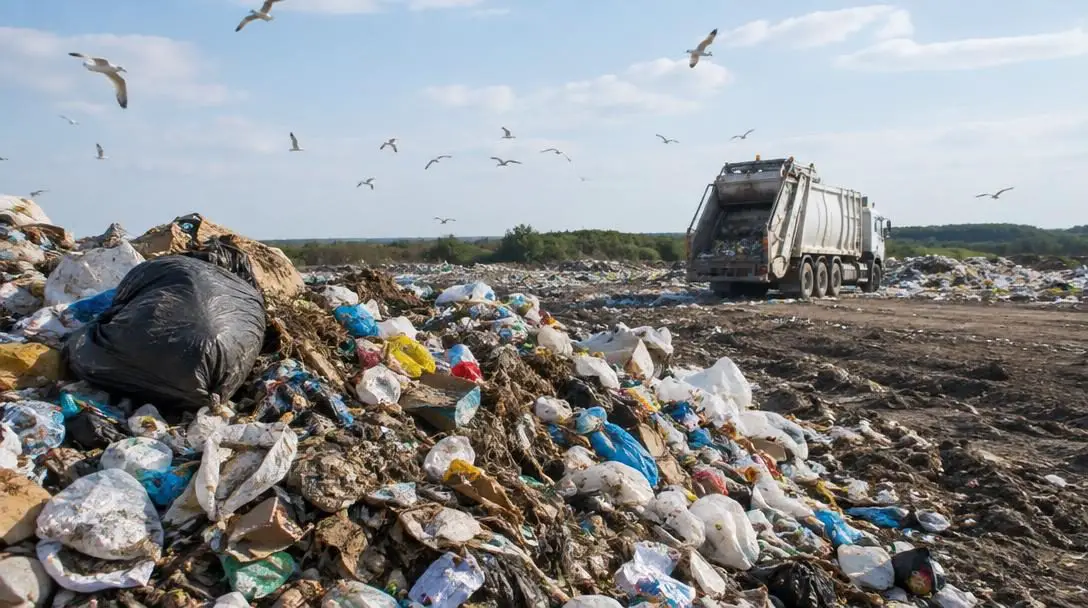
Trash is rarely something that occupies our thoughts for more than a few moments each week. In our day-to-day routines, we generate waste, discard it into a household bin, and wheel that bin out to the curb on collection morning. Eventually, an early-morning truck hauls the contents away to an out-of-sight facility where we casually assume it will sit indefinitely.
However, refuse does not simply vanish. When your household waste merges with the discards of millions of other residents, it forms a sprawling, complex stream that reshapes landscapes, strains municipal budgets, and alters natural ecosystems around the globe. Every single bag carried to the curb is a tangible reflection of natural resource consumption and community logistics.
Key takeaways
- Americans produce an average of 4.4 pounds of trash per person each day, nearly double the global average.
- Municipal trash frequently journeys across state borders via complex regional networks of highway haulers, rail cars, and barges.
- Certain cities operate rapid-response protocols that allow sanitation workers to intercept accidentally discarded valuables before burial.
- Roughly 8 million metric tons of plastic waste leak into marine environments worldwide every single year.
- Effective waste reduction relies on eliminating single-use materials, avoiding recycling contamination, and diverting organic matter.
Five surprising facts about everyday waste
The journey of ordinary solid waste contains surprising quirks, hidden logistical triumphs, and troubling environmental patterns. Below are five eye-opening realities about what happens to the items we casually toss away.
1. American waste production drastically outpaces global norms
The volume of discarded material generated in the United States dwarfs that of most other nations. Americans generate about 4.4 pounds of trash daily per person, a figure that stands in sharp contrast to the global average of approximately 2.6 pounds per day. While American citizens account for roughly 4 percent of the global population, the country is responsible for generating 12 percent of the planet's total solid waste.
Beyond the 4.4 pounds sent off to disposal sites, the Environmental Protection Agency calculates that Americans recycle and compost an additional 1.5 pounds of material per person each day. Despite the scale of these published numbers, some environmental researchers caution that these figures may actually represent conservative estimates of overall discarded mass.
2. Discarded goods travel across state lines
Many people picture a neighborhood garbage truck driving a few miles down the road to dump its load into a nearby pit. In reality, municipal waste is an interstate commodity governed by high-capacity logistics networks. Because urban centers often lack regional landfill capacity, immense quantities of trash are transported over hundreds of miles.
A landmark 2009 Massachusetts Institute of Technology tracking project followed 3,000 discarded items from Seattle and discovered that they ultimately fanned out to disposal facilities all across the United States. Similarly, New York City ships virtually all of its municipal garbage out of state, transferring tonnage into New Jersey, Ohio, and beyond. In Kentucky, one major regional landfill was found to hold an inventory where 80 to 90 percent of all buried waste originated in other states. That half-eaten snack or broken household gadget sitting in your trash bin may well take an interstate road trip before reaching its final resting place.
3. Thrown-out valuables can sometimes be recovered
Accidentally tossing an irreplaceable keepsake, financial paper, or wedding ring into the trash feels like an irrevocable catastrophe. Famous horror stories abound, such as the widely publicized incident in England involving an IT worker who accidentally discarded a computer hard drive containing 250,000,000 dollars in Bitcoin that remains buried deep under tons of compacted municipal refuse.
Yet an accidental discard is not always a permanent loss. Several municipal sanitation departments maintain emergency intervention procedures. In Albuquerque, for instance, residents who realize they have accidentally discarded an item of significant value can notify sanitation dispatch within several hours of pickup. Dispatchers can then identify the collection truck, divert it before dumping, or isolate specific piles at transfer centers to give residents an opportunity to search the refuse. These recovery operations, however, are strictly intended for vital records and genuine valuables, not low-value novelties.
4. Curbside bags act as canine scent beacons
Anyone who walks a dog along a residential sidewalk on trash morning has observed an unmistakable phenomenon: dogs gravitate toward curbside trash bags as their preferred spot to stop and relieve themselves. This behavior is driven by two distinct animal instincts.
First, a sudden row of plastic bags creates a newly altered physical landscape, prompting curiosity and investigation. Second, household garbage bags emit an intense collection of rich, contrasting odors, ranging from decomposing meat trimmings and cooking grease to discarded food packaging. Because canines rely on chemical communication to mark territory, a curbside trash bag effectively serves as an elevated scent billboard for neighborhood animals broadcasting their presence to others.
5. Millions of tons of discarded plastic enter marine ecosystems
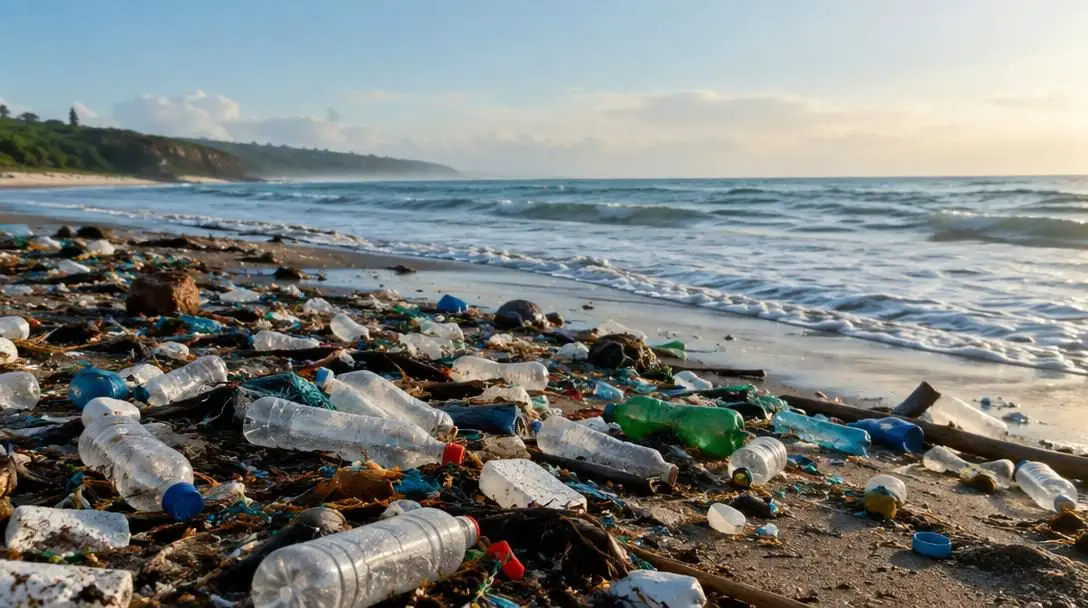
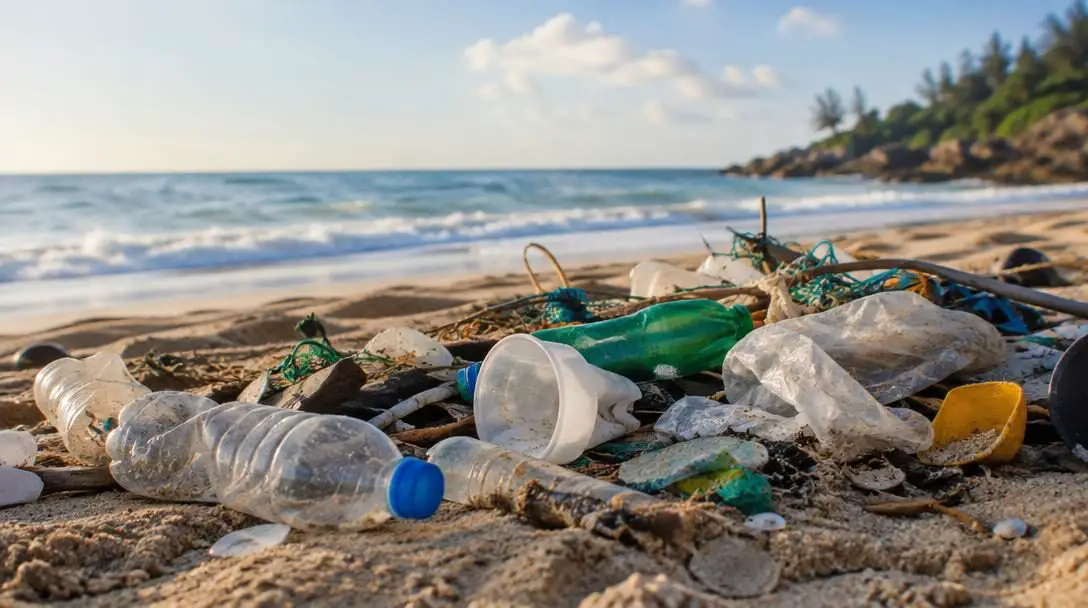
Despite modern containment efforts, an alarming proportion of consumer waste escapes controlled waste management streams. An estimated 8 million metric tons of plastic enter the world's oceans annually. To understand the sheer density of this environmental influx, imagine lining up five full grocery bags packed with plastic waste along every single foot of coastline around the entire globe.
Once introduced into marine environments, synthetic plastics do not degrade naturally. Instead, ultraviolet radiation and wave motion fragment them into microplastics, which contaminate marine food chains and damage fragile aquatic habitats. Curtailing the reliance on single-use packaging directly reduces the total volume of durable debris that can escape into waterways.
Every single bag carried to the curb is a tangible reflection of natural resource consumption and community logistics.
Comparing daily domestic and global waste metrics
Evaluating national consumption patterns alongside broader global benchmarks illustrates the disproportionate share of resources utilized and discarded within modern consumer economies.
| Metric | United States | Global Average / Benchmark |
|---|---|---|
| Daily trash generated per capita | 4.4 pounds | 2.6 pounds |
| Daily composted and recycled per capita (EPA) | 1.5 pounds | Varies widely by country |
| Share of global human population | Approximately 4% | 96% (Rest of world) |
| Share of global municipal solid waste produced | Approximately 12% | 88% (Rest of world) |
From organic discards to engineered containment
Human refuse has changed radically over the course of centuries. For the vast majority of human history, domestic discards were almost entirely organic, composed of bone fragments, agricultural residues, ashes, textiles made from plant fibers, and broken earthenware. In pre-industrial villages and medieval cities, natural biological processes decomposed discarded material over time, or organic scraps were repurposed as animal feed.
The industrial revolution dismantled this natural balance. The widespread adoption of synthetic polymers, disposable tins, petroleum-derived packaging, and consumer electronics introduced materials that natural biological decay cannot break down. Early twentieth-century cities initially addressed this influx through unlined open-air burning pits or by hauling barge loads of debris directly into coastal waters.
As ground-level air pollution, rodent infestations, and widespread water contamination sparked public health emergencies, industrialized nations enacted regulatory frameworks. Modern waste management abandoned open dumping in favor of sanitary engineering, constructing contained systems designed to isolate municipal waste from air, soil, and regional drinking water reservoirs.
Inside the modern waste management pipeline
Disposing of a household bag sets off a sequence of complex mechanical and civil engineering processes designed to control odors, limit environmental contamination, and safely contain municipal refuse.
- Curbside hydraulic compaction: Specialized collection trucks pick up curbside containers and feed the waste into internal hydraulic compactors. These compactors exert enormous force, crushing cardboard, plastic, and domestic refuse to maximize weight density before the vehicle exceeds legal roadway axle limits.
- Transfer station consolidation: Because municipal landfills are typically located far outside urban boundaries, standard neighborhood collection trucks rarely complete the long-distance trip. Instead, they empty their loads onto the concrete floors of enclosed regional transfer stations. Bulldozers consolidate the heaps, which are subsequently loaded into high-capacity tractor-trailers, railway hoppers, or container barges.
- Sanitary cell containment: At an engineered landfill, waste is unloaded onto an active working face. The disposal footprint is lined with compacted clay layers topped with heavy-gauge synthetic geomembranes. Heavy steel-wheeled compactors roll back and forth over the debris, crushing it into dense layers. At the close of each working day, crews apply a daily cover of clean dirt or flame-retardant synthetic foam to block scavengers and mitigate odors.
- Leachate collection and treatment: When rainwater percolates through compacted waste, it leaches out dissolved chemicals, heavy metals, and organic contaminants. Landfills incorporate perforated base pipes embedded in gravel layers beneath the synthetic liners to channel this toxic fluid, known as leachate, to wastewater treatment facilities.
- Methane gas extraction: Organic material decomposing deep underground in the absence of oxygen produces substantial volumes of landfill gas, which is roughly half methane. Modern facilities install networks of vertical gas extraction wells. The captured gas is either flared off under controlled conditions to eliminate atmospheric methane emissions or refined into fuel to generate electricity.
Simple household practices to trim your trash footprint
Lowering your waste footprint does not require adopting an extreme, zero-waste lifestyle overnight. Minor adjustments to daily routines can divert dozens of pounds of refuse from disposal channels every month.
- Conduct a household waste audit: Spend one week reviewing the primary contents of your indoor bins. Determining whether your domestic output is dominated by corrugated packaging, single-use plastic wrap, or food waste helps you identify where behavioral changes will yield the greatest impact.
- Keep reusable bags ready: Store canvas shopping totes directly in your vehicle or by the primary entrance of your home. Keeping them easily accessible prevents the need to use thin plastic grocery bags, which jam mechanical sorting machinery at recycling depots.
- Opt for minimal and bulk packaging: Whenever possible, purchase household dry goods from bulk bins, choose unpackaged fresh produce, and favor products housed in recyclable corrugated paperboard rather than thick plastic clamshells.
- Divert kitchen scraps through composting: Food waste is dense, heavy, and rich in moisture, making it an especially problematic contributor to landfill leachate and methane production. Composting vegetable peels, coffee grounds, and yard trimmings at home or using municipal green bins keeps valuable nutrients in the soil cycle.
- Purchase post-consumer recycled goods: Close the recycling loop by seeking out everyday household goods, storage containers, and textiles fabricated from verified post-consumer plastics and recycled fibers.
Critical waste disposal mistakes to avoid
Even well-intentioned households frequently make errors that contaminate recycling lines, damage machinery, or create safety hazards for collection workers.
- Wishcycling: Placing non-recyclable materials—such as greasy pizza boxes, ceramic plates, plastic drinking straws, or tangled garden hoses—into a recycling bin in the hope that they will be repurposed. These rogue items disrupt optical sorters and can force entire truckloads of clean recyclables into the landfill.
- Bagging clean recyclables: Unless explicitly instructed by your regional waste authority, never pack aluminum cans, jars, and paper inside plastic trash bags before placing them in the recycling bin. Facilities process items at high speeds, and operators do not have time to slice open mystery bags, causing the entire bagged bundle to be discarded as trash.
- Improper hazardous waste disposal: Liquid household paints, pool treatments, motor oil, and flammable solvents must never be combined with ordinary garbage. These materials should be saved for scheduled community hazardous waste collection days.
- Delaying action on lost property: Waiting days or weeks to notify municipal waste managers after losing an important item guarantees that the material will be crushed, buried, or transported hundreds of miles away. Rapid action is essential for any realistic recovery effort.
Frequently asked questions
How much trash does the average American generate each day?
According to federal data, the average American produces approximately 4.4 pounds of disposed garbage every day. When accounting for items diverted through municipal composting and recycling, an additional 1.5 pounds per person is collected daily.
Why is trash shipped to other states instead of buried locally?
Many densely populated urban areas lack the vast, inexpensive land required to build modern sanitary landfills. Municipalities contract with long-haul transportation carriers to haul consolidated refuse by truck, rail, or barge to rural states where operating landfills is economically viable.
Can sanitation workers really find something I accidentally threw away?
In certain cities with dedicated recovery procedures, such as Albuquerque, contacting sanitation authorities within several hours of collection can sometimes allow crews to isolate a specific truck or transfer station bay. However, this is only done for critical valuables, and the chance of recovery drops significantly once waste is compacted or loaded for long-haul transport.
Why do dogs target garbage bags on collection day?
Dogs are naturally drawn to trash bags because they represent unfamiliar additions to their daily territory and carry dense concentrations of stimulating scents, including discarded meat scraps and wrappers. Dogs instinctively deposit their own scent on prominent, odor-rich objects to communicate with other animals.
How much plastic enters the ocean every year?
Roughly 8 million metric tons of plastic waste leak into the world's oceans each year. This quantity is equivalent to placing five standard grocery bags filled with plastic along every single foot of coastline across the globe.
What is wishcycling and why does it matter?
Wishcycling is the practice of tossing questionable items into the recycling bin hoping they can be recycled. This causes major issues at sorting facilities by jamming conveyor belts, breaking sorting screens, and turning otherwise clean loads of paper or plastic into contaminated trash.
The bottom line
Dragging the trash bin down the driveway is so routine that it is easy to forget the immense environmental and logistical footprint it represents. Waste management is not an invisible, self-contained disposal loop; it is an industrial infrastructure network that handles millions of tons of domestic consumer refuse every single day.
By understanding how municipal waste moves from your curb through transfer hubs and into modern engineered landfills—or out to sea—you can make smarter purchasing decisions, minimize packaging waste, and keep contamination out of the recycling stream. Taking an active role in how you discard materials protects local communities, natural resources, and the wider environment.