5 Tips for Solo Women Hikers
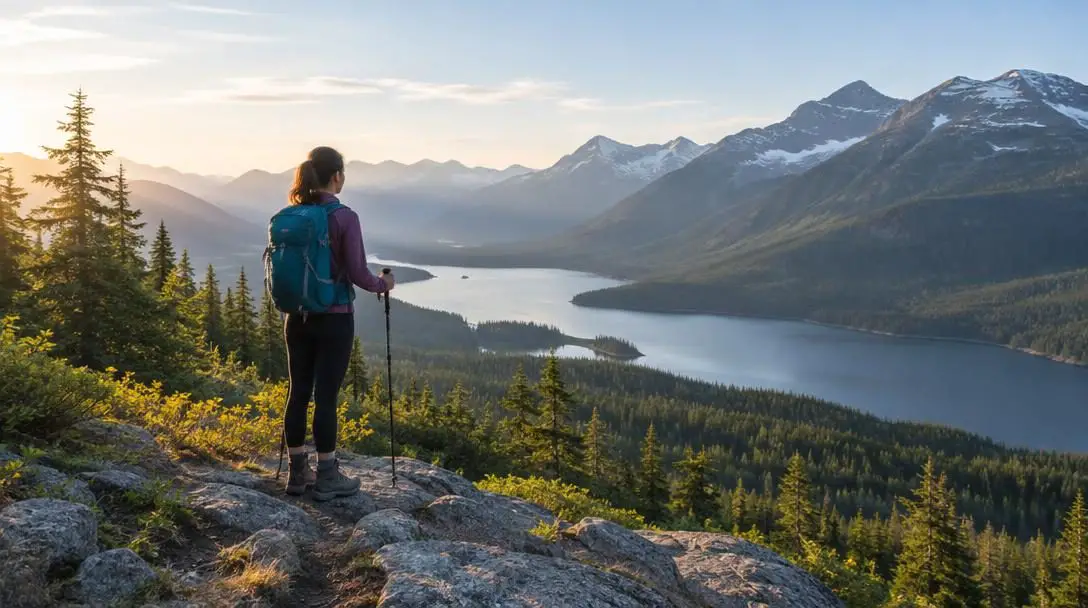
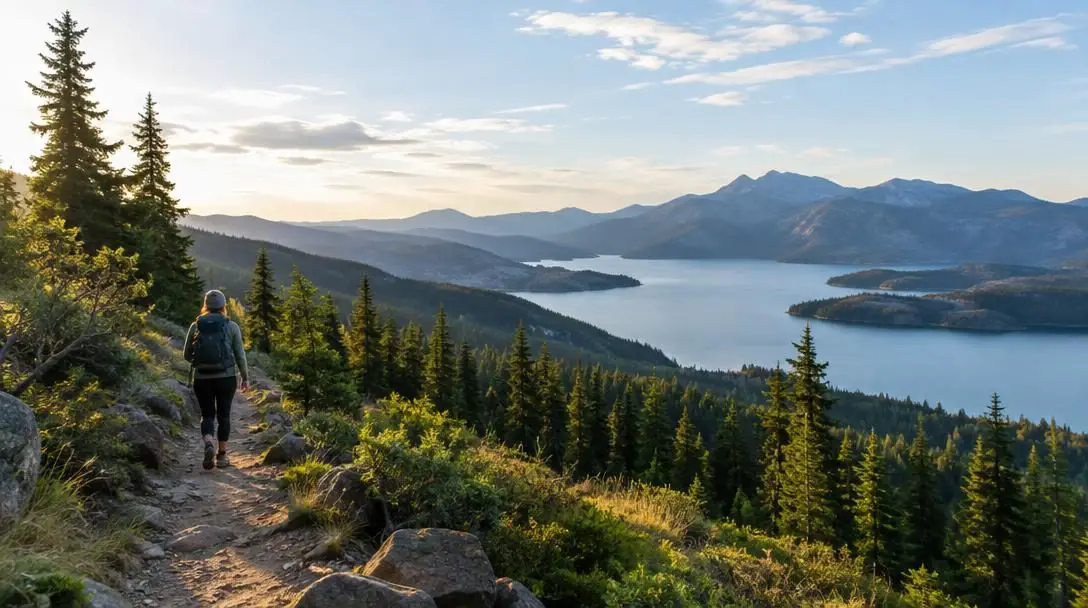
Solo hiking offers an unmatched sense of personal freedom, deep mental clarity, and profound physical renewal. Taking to the trail unaccompanied strips away everyday digital noise, allowing you to reflect quietly while immersing your senses in the sights, textures, and sounds of the natural world. Reaching an alpine summit or finishing a demanding backcountry circuit entirely under your own power delivers a distinct sense of accomplishment that shared treks rarely match.
While societal narratives often frame the outdoors as inherently hazardous for solo women, backcountry trails are statistically comparable to, if not safer than, typical urban environments. However, solitary wilderness travel means you must rely entirely on your own foresight, self-reliance, and physical capabilities. By understanding environmental hazards, carrying the right gear, and practicing disciplined safety habits, any woman can venture onto the trails with autonomy and true peace of mind.
Key takeaways
- Solo hiking provides significant mental and physical rewards when backed by disciplined preparation and self-reliance.
- Sharing a confidential itinerary with a trusted contact ensures a passive emergency trigger if you are delayed or injured.
- Digital tools like AllTrails and Kompass offer critical insights into trail difficulty, elevation profiles, and community conditions.
- Preserving auditory awareness by leaving headphones behind is essential for detecting wildlife, weather shifts, and other hikers.
- Safety in the backcountry relies on overlapping systems of gear, route planning, defensive tools, and real-time awareness.
The 5 Core Tips for Solo Women Hikers
Venturing out on your own does not require reckless bravado; rather, it demands structured routines that reduce risk without compromising your connection to the wilderness. Implementing these five core practices establishes a dependable foundation for any solitary excursion.
Always Let Someone Know Your Hiking Plans
The single most important administrative habit before setting foot on the trail is establishing a clear travel plan with a dependable contact. Share your comprehensive itinerary with a trusted relative or close friend before leaving home. This document should detail your planned departure time, the specific trailhead where your vehicle is parked, the exact names or trail numbers you intend to follow, and your estimated time of return.
Equally critical is exercising strict discretion regarding who receives your travel plans. Never announce your route or timetable on public hiking forums or open social media groups, and resist the temptation to invite strangers from the internet to meet you at a trailhead. Publicly broadcasting your solitary presence on a specific trail compromises your personal security by alerting malicious actors to your location.
Download a Good Hiking App
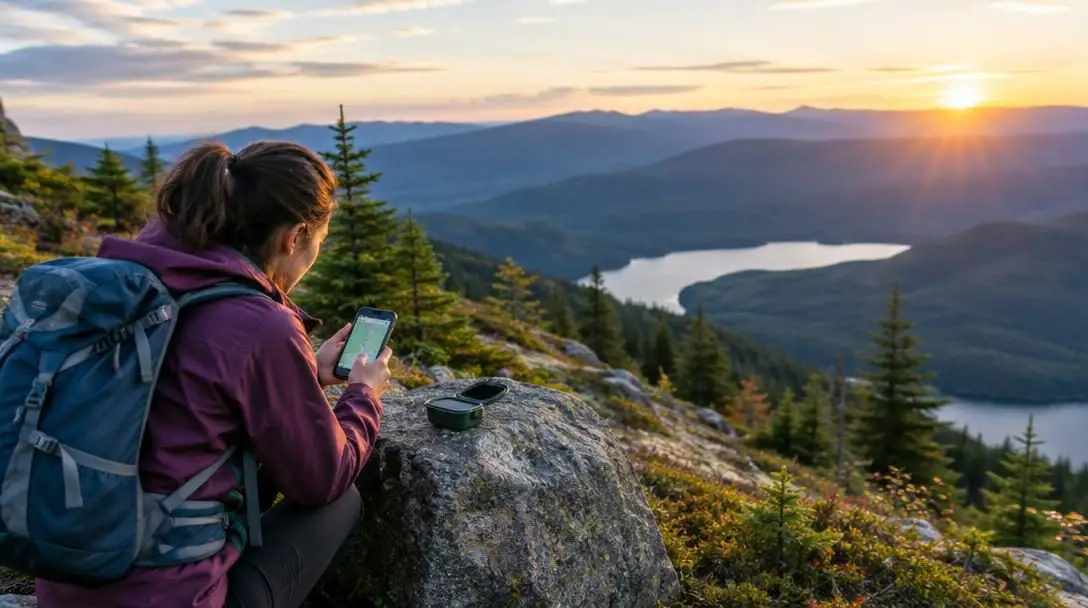
Modern mobile applications serve as powerful companions for route scouting, terrain evaluation, and continuous orientation. Dedicated outdoor platforms like Kompass and AllTrails supply detailed metrics that help you determine whether a route aligns with your personal fitness and technical ability. These platforms outline total distance, cumulative elevation gain, route topology, and estimated completion times.
Beyond baseline topographical data, modern applications aggregate community reviews from hikers who navigated the trail recently. Reading these firsthand trip reports alerts you to washed-out bridges, seasonal closures, aggressive animal activity, or tricky navigational landmarks. Many of these digital tools also provide live location-sharing features, allowing designated family members to follow your progress when cellular networks are operational.
Stay Connected
While the psychological appeal of going off-grid is understandable, maintaining an active connection to civilization is vital when traveling alone. In an acute emergency—such as an incapacitating fall, sudden disorientation, or severe illness—placing a direct telephone call to local emergency dispatchers or a personal contact is often the fastest path to rescue.
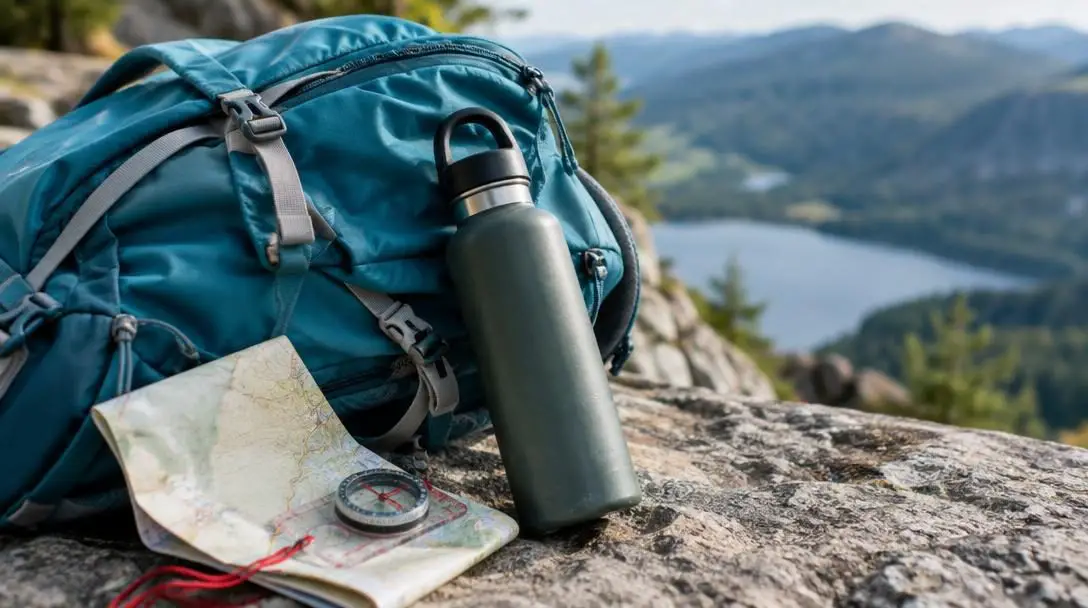
Whenever practical, prioritize routes with verified, consistent cellular coverage. Check carrier coverage projections along your prospective route during your planning phase. Treating your phone as a critical safety lifeline means preserving its battery life: keep your device warm in freezing conditions, minimize unnecessary screen time, and maintain sufficient power to place an urgent call if conditions deteriorate.
Prepare for the Worst-Case Scenario
A reliable outdoor philosophy requires planning for the absolute worst outcomes while hoping for the best. Sudden mountain storms, unexpected trail detours, and minor injuries can prolong a standard day hike into an overnight survival scenario. Solitary female hikers must pack specialized equipment designed to sustain life and deter potential threats.
Your pack should always contain a lightweight rain jacket to shield against rapid temperature drops and stave off life-threatening hypothermia, alongside an emergency blanket to trap body heat if you are stranded overnight. For signaling, carry a high-decibel whistle; its sharp pitch carries much farther than human vocalizations and assists search-and-rescue teams in locating you. When venturing into territory inhabited by large predators, keep bear spray holstered and immediately reachable. Additionally, consider personal defense measures against dangerous human or animal encounters, such as carrying mace, a defensive knife, or trekking alongside a well-trained dog.
Be Aware of Your Surroundings
Although wilderness trails are predominantly peaceful, letting your guard down is never an option for the unaccompanied trekker. The most dangerous mistake a solo hiker can make is wearing earbuds or noise-canceling headphones while on the trail. By obstructing your hearing, you intentionally blind yourself to your environment's earliest hazard detection systems.
Your ears pick up critical sensory cues long before your eyes can verify them. Ambient wilderness sounds reveal the snapping branches of a large approaching mammal, the rapid footsteps of another trail user approaching from behind, the dry rattle of a defensive rattlesnake, or the distinctive hum of a disturbed hornets' nest. Remaining fully tuned in to the acoustic landscape grants you the necessary time to react, retrieve safety gear, or alter your path.
Essential Safety Gear and Defensive Tools
Packing for a solitary outing requires striking a delicate balance between light pack weight and comprehensive protection. The tools you carry serve distinct roles across thermal regulation, communication, and physical deterrence.
| Gear Item | Primary Purpose | Critical Scenario | Storage Location |
|---|---|---|---|
| Lightweight Rain Jacket | Weatherproofing and hypothermia prevention | Sudden downpours and unexpected wind chill | Top of daypack |
| Emergency Blanket | Body heat retention and shelter creation | Forced overnight stays or traumatic injury shock | Dedicated safety pocket |
| Trail Whistle | Audible distress signaling | Summoning nearby hikers or search-and-rescue crews | Sternum strap or around neck |
| Bear Spray | Non-lethal wildlife deterrent | Encounters with aggressive large mammals | Hip belt or chest holster |
| Mace or Defensive Knife | Close-range personal self-defense | Threats from hostile humans or aggressive animals | Quick-draw hip holster or jacket pocket |
| Trained Trail Dog | Threat detection and deterrence | Early hazard warning and physical protection | Leashed alongside hiker |
Carrying protective equipment is only effective when paired with the situational awareness needed to recognize a hazard before it closes the distance.
How Solo Hiking Safety Systems Work
Backcountry safety never relies on a single piece of equipment or an isolated routine. Instead, true security is achieved through overlapping layers of protection. When you establish redundant safety systems, the unexpected failure of one layer is immediately balanced by another.
Consider your communication strategy. A cellular phone is an extraordinary navigation and emergency dispatch mechanism, but its reliability is fragile. Batteries deplete rapidly in cold environments, screens shatter upon impact with rocks, and signals vanish within deep ravines. Because your mobile device can fail without warning, your pre-filed itinerary serves as an automatic, passive safety net. If you are rendered unconscious or unable to call for help, your trusted contact knows your exact trail route and the specific time you were due back, allowing them to notify search-and-rescue teams without delay.
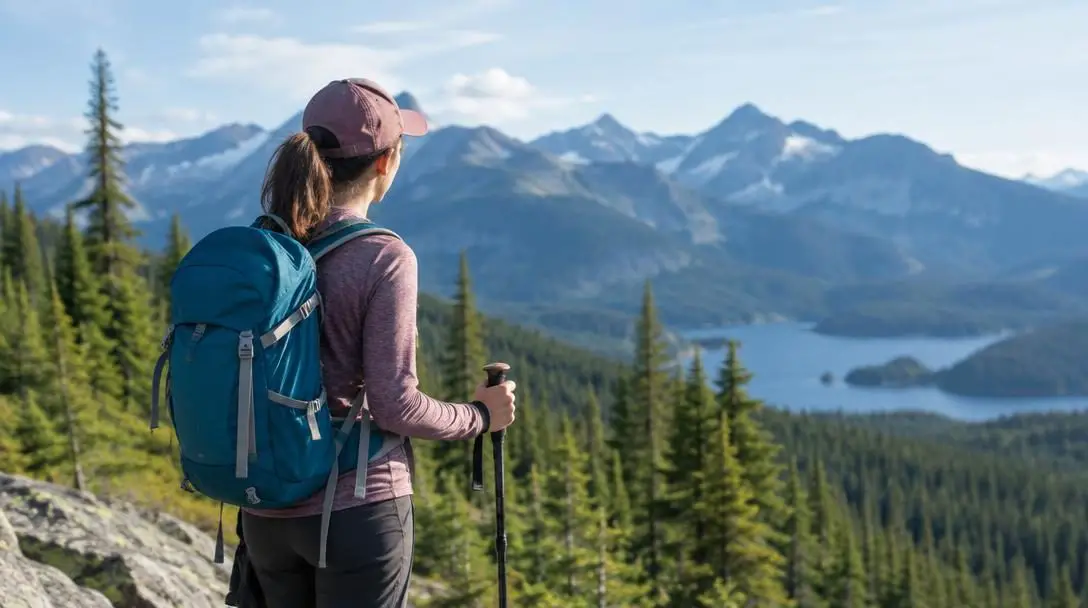
In a similar manner, physical defensive equipment operates directly in tandem with environmental alertness. Defensive tools like bear spray, mace, or a knife are useless if buried inside your bag or if a hazard catches you unawares. Constant situational awareness buys the vital seconds required to assess an unfolding event, withdraw your deterrent, unlatch the safety mechanism, and establish a secure physical stance.
Step-by-Step Preparation and Execution
Executing an independent trek requires thoughtful structure before, during, and after you step onto the dirt. Following a systematic procedure ensures no safety-critical step is skipped.
- Select an appropriate route: Evaluate digital maps on AllTrails or Kompass to choose a path matching your current physical stamina, elevation tolerance, and technical experience. Review recent community reports for washouts, trail work, and wildlife activity.
- Draft and distribute your travel plan: Write down your exact intended route, departure time, vehicle details, and estimated return window. Deliver this information to a dependable friend or relative, with precise instructions on when to contact emergency services if you do not check in.
- Assemble essential gear: Pack your daypack with thermal protection, your rain jacket, an emergency blanket, a signaling whistle, and selected defensive deterrents. Verify that all emergency items are stowed in easily accessible exterior pockets or holsters.
- Verify digital and physical navigation: Fully charge your mobile device and download offline topographical maps inside your chosen hiking application to preserve access when cell service drops.
- Perform a trailhead check: Lock your vehicle, stow personal valuables completely out of sight, review local trailhead informational kiosks for seasonal warnings, and tuck your earphones away inside your pack.
- Maintain continuous trail vigilance: Keep your head up, scan the terrain ahead, monitor junctions, and listen actively for changing environmental conditions, animal noises, and approaching foot traffic.
- Close out your travel plan: The moment you complete your trek and return to your vehicle or an area with solid cell reception, notify your emergency contact immediately so they can close out your travel watch.
Common Mistakes Solo Hikers Make
Even seasoned backcountry explorers can fall into habits of complacency. Recognizing common missteps is the most effective way to keep your outings safe and rewarding.
- Broadcasting plans publicly: Posting real-time route details, trail choices, or open invites on social channels alerts unknown individuals to your solitary status and precise geographical location.
- Trekking with audio devices: Wearing headphones or earbuds removes your earliest sensory defense, leaving you vulnerable to sudden encounters with bears, rattlesnakes, hornets, or aggressive individuals.
- Burying safety tools inside the pack: Keeping emergency blankets, bear spray, whistles, or mace deep inside a main pack compartment renders them inaccessible during high-stress encounters where seconds matter.
- Assuming uninterrupted mobile coverage: Believing that modern cellular networks will cover remote wilderness valleys leads to panic when an emergency strikes and there is no signal.
- Ignoring changing weather and ambient light: Becoming so absorbed in your progress that you fail to notice falling temperatures, gathering storm clouds, or sunset times can result in being caught in the dark without adequate insulation.
Expanding Your Foundational Wilderness Skills
As you log more miles and grow comfortable exploring independently, you can systematically broaden your wilderness competencies to unlock more ambitious trails. The natural progression from local day hikes to rugged backcountry environments requires deepening your practical field knowledge.
Enrolling in an introductory wilderness first aid course is one of the most empowering investments an independent hiker can make. These practical programs teach you how to splint broken bones, dress lacerations, treat blister friction, and manage hypothermia with limited supplies when professional medical aid is hours away. Learning these techniques transforms uncertainty into decisive action.
Furthermore, if you aspire to hike in remote mountain ranges or deep canyon systems where standard mobile phones cannot find a signal, consider integrating satellite communication hardware into your kit. Two-way satellite messengers allow you to ping predefined check-in messages to family members and trigger dedicated SOS rescue beacons from any coordinate on Earth. Finally, schedule time to practice drawing and deploying your safety equipment under calm conditions; knowing the mechanics of your bear spray or defensive deterrent by muscle memory ensures smooth, confident execution should an emergency arise.
Frequently asked questions
Is solo hiking safe for women compared to urban walking?
Yes. Statistically, solo wilderness hiking is generally just as safe as, if not safer than, navigating high-density urban areas. However, the wilderness requires distinct preparations because environmental hazards, rapid weather changes, and medical emergencies must be managed independently without immediate municipal support.
Why should I avoid posting my hiking plans on public forums?
Posting specific itineraries, trail start times, or open invitations on public internet forums exposes your exact whereabouts to unverified strangers. Broadly sharing this information creates an avoidable security vulnerability by letting malicious individuals know precisely where and when you will be traveling alone.
Which apps are recommended for tracking trail data and reviews?
Dedicated hiking applications such as AllTrails and Kompass are highly recommended. These platforms supply accurate measurements of trail length, elevation gain, technical difficulty ratings, and community reviews that highlight real-time hazards like trail damage or recent wildlife sightings.
Why is wearing headphones or earbuds considered dangerous on trails?
Wearing earbuds eliminates your auditory early-warning system. Hearing subtle sounds—such as breaking branches from large wildlife, the warning rattle of a rattlesnake, the hum of hornets, or approaching human footsteps—allows you to detect hazards and respond long before they enter your field of vision.
What thermal gear should I always pack, even on short summer day hikes?
You should consistently carry a lightweight rain jacket to ward off downpours and wind chill, as well as an emergency blanket. Both items weigh very little but provide critical body heat retention to prevent hypothermia if an injury or navigational error strands you outside past dark.
The bottom line
Stepping onto a hiking path alone is one of the most rewarding expressions of autonomy and outdoor self-reliance available to modern women. Wilderness solitude delivers deep mental restorative benefits, physical vitality, and an earned sense of personal competence. By putting dependable safety routines in place—distributing strict itineraries, utilizing reliable navigation tools, packing vital survival layers, and remaining fully engaged with your environment—you transform potential anxieties into quiet, enduring confidence on every trail you explore.