Is Landfill Mining the Future?
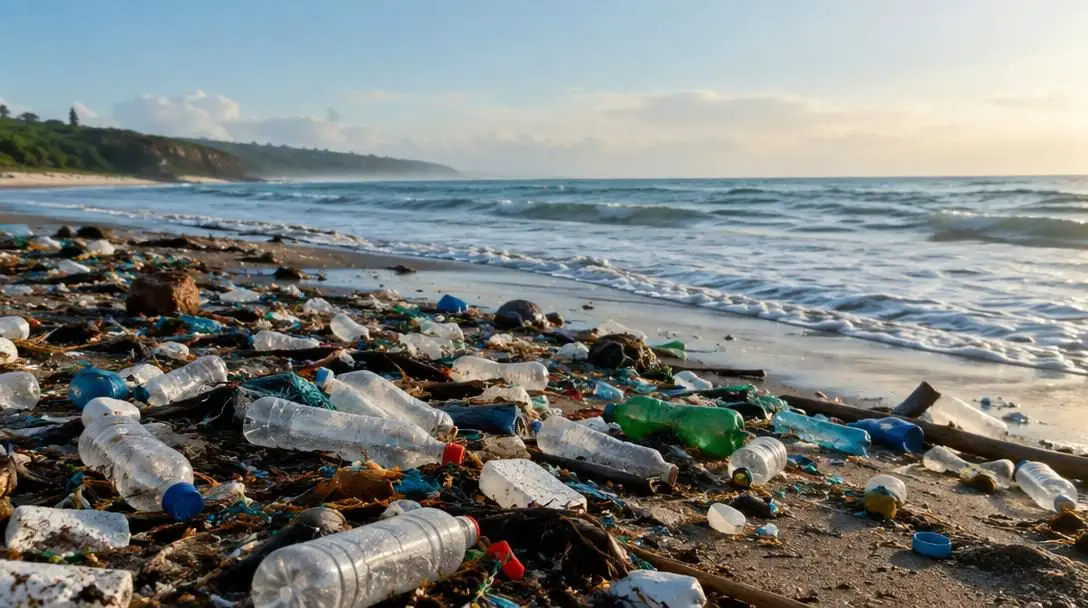
Every single year, human activity produces vast mountains of refuse, resulting in more than two billion tons of waste dumped into landfills across the globe. For generations, modern communities have treated municipal burial sites as an unavoidable necessity for handling discarded household goods, commercial waste, and industrial scrap. However, conventional facilities are rapidly running out of physical room, leaving planners with difficult choices regarding how to manage society's discarded materials.
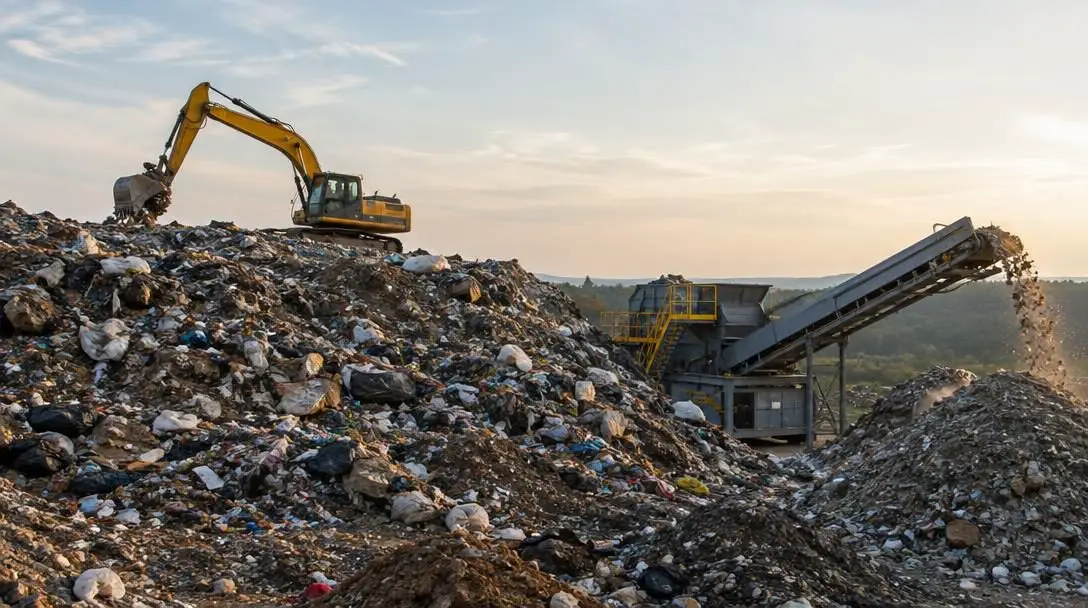
Beneath the soil of modern disposal grounds sit immense quantities of commodities that were never designed to remain buried permanently. Rather than letting usable resources languish while open ground diminishes, environmental engineers and waste managers are turning their attention toward landfill mining. By reopening historical disposal trenches to excavate, sort, and salvage buried materials, operators hope to reclaim valuable land, capture recyclable supplies, and remediate severe environmental hazards before subterranean contaminants reach vital ecosystems.
Key takeaways
- More than two billion tons of refuse enter municipal disposal facilities worldwide every year, exhausting physical landfill space.
- Landfill mining uncovers settled waste mounds to recover recyclable metals, plastics, and reusable raw commodities.
- Heavy industrial sorting machinery, including mass excavators, magnetic separators, trommels, and vibratory screens, processes excavated refuse.
- Excavating long-dormant landfill cells shields groundwater from toxic battery chemicals but risks releasing concentrated bursts of trapped methane gas.
- Upstream source reduction and conscientious domestic waste separation remain the most cost-effective lines of defense against landfill overfill.
The Global Waste Challenge and Capacity Pressures
Human society generates tremendous volumes of discarded matter every day. Municipal gathering systems gather consumer trash, commercial packaging, and demolition remnants, hauling them out of sight to dedicated storage facilities. Because these burial sites operate under the assumption that buried items will remain undisturbed indefinitely, vast quantities of materials that could have entered manufacturing cycles are instead permanently sealed underground.
This endless stream of solid refuse creates two compounding challenges: depleted physical volume and severe environmental footprints. Municipal administrators increasingly struggle to locate suitable plots for new landfill construction as existing storage cells reach their design limits. Expanding facilities often encounters public resistance and triggers ecological habitat destruction. At the same time, leaving valuable secondary raw materials trapped beneath layers of soil forces manufacturing industries to depend on newly extracted virgin commodities, accelerating environmental extraction elsewhere on the planet.
What Is Landfill Mining?
Landfill mining is the intentional excavation and mechanical processing of buried solid waste from active or closed disposal sites. Rather than treating an established landfill as a permanent burial crypt, operators view the subterranean mass as an unrefined reserve of secondary commodities. Specialized teams systematically peel back original cover soils to reveal decades of accumulated consumer goods, scrap materials, and decomposed organic matter.
Once operators unearth the compacted refuse, the stream passes through advanced mechanical sorting equipment designed to isolate high-value components. Ferrous metals, reusable plastics, and structural debris are separated and routed directly to industrial scrap dealers or specialized recycling facilities. By pulling substantial masses of materials out of the ground, municipalities can achieve two critical objectives: expanding available storage space for refuse that cannot otherwise be recycled, and neutralizing lingering contamination threats, such as leaking battery packs and toxic industrial chemicals.
Mechanical Equipment Used in Landfill Mining Operations
Processing complex, heterogeneous waste that has spent years compressed under heavy earth requires durable industrial hardware. Landfill mining operations deploy heavy machinery to safely extract, break apart, and classify dense refuse matrices into distinct, usable streams.
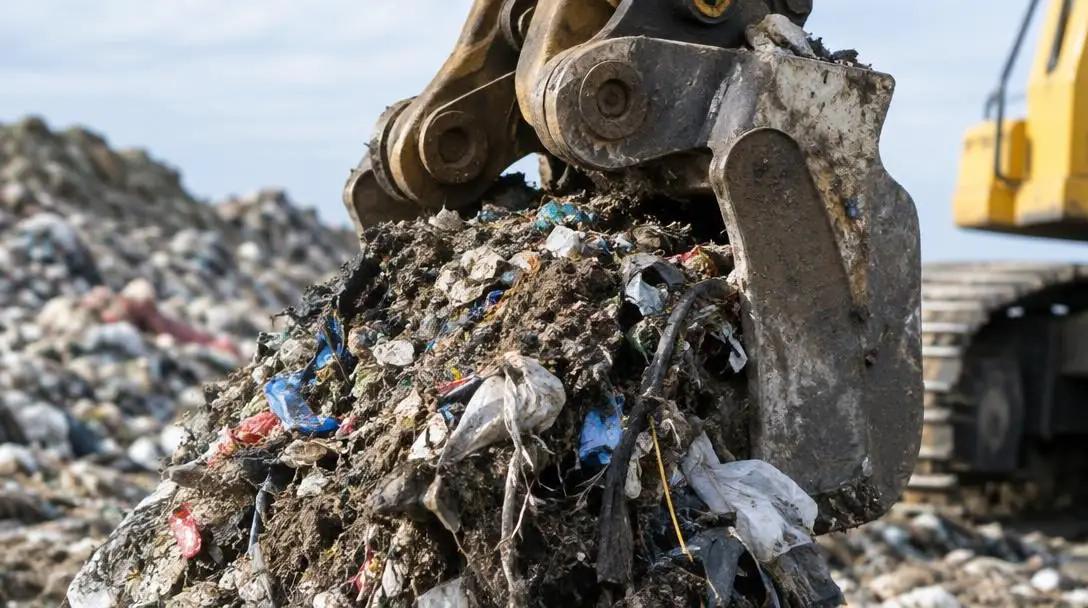
Mass excavators
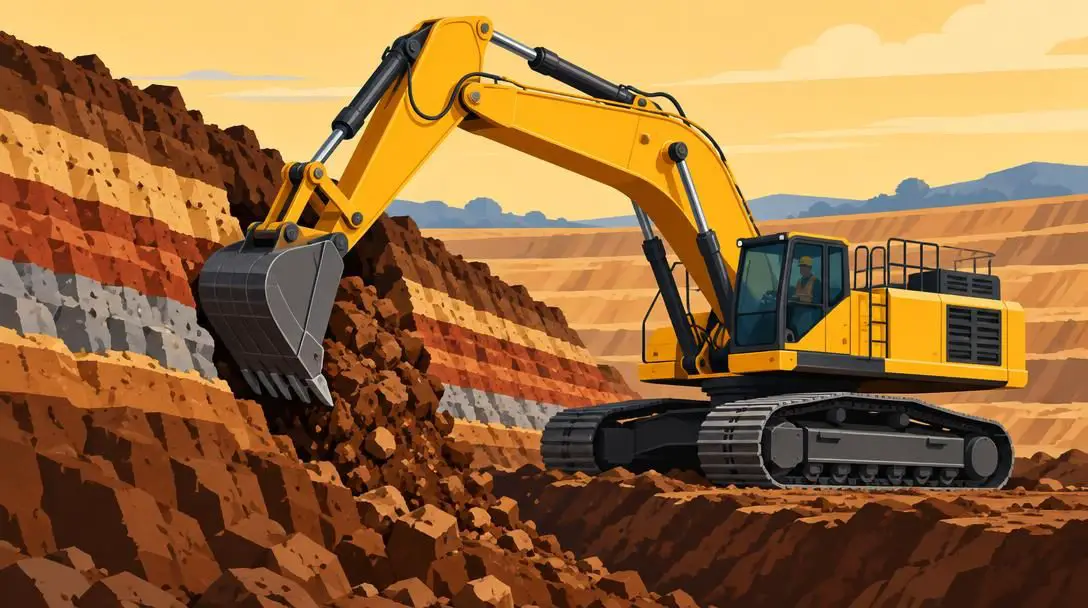
Mass excavators represent the foundational equipment of any landfill mining project. These hydraulic machines use heavy-duty buckets to penetrate compacted cover dirt and tear through dense underground strata of consolidated trash. They remove large volumes of buried waste and deposit the bulk payload directly into primary loading hoppers, conveyor systems, or all-terrain haul trucks for preliminary sorting.
Large magnets
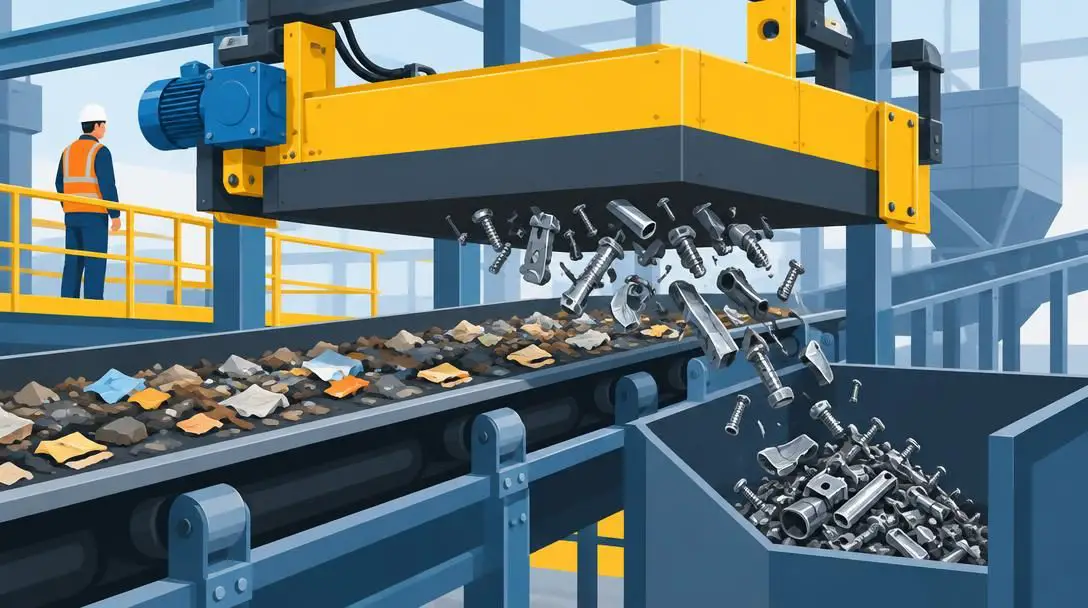
Once excavated waste is deposited onto processing conveyors, powerful industrial magnetic separation systems extract ferrous scrap. Suspended over fast-moving conveyor lines or integrated directly into mobile processing units, these magnets pull iron, steel, and related magnetic alloys cleanly out of the mixed waste stream. Isolating clean ferrous metal provides immediate economic return through direct sales to commercial scrap buyers and metal foundries.
Trommels
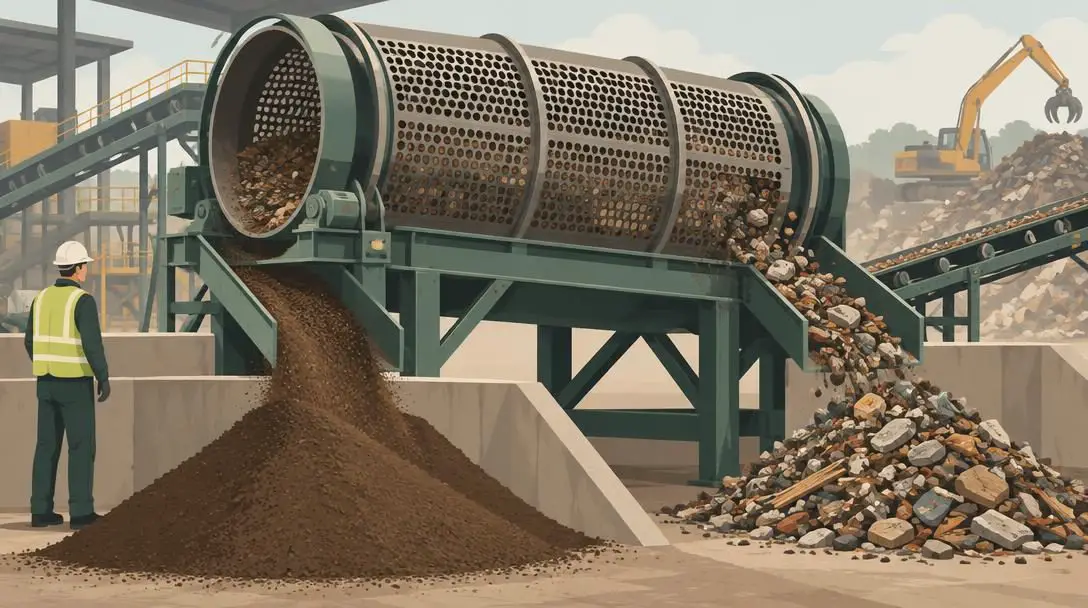
A trommel is a large, motorized cylindrical sieve mounted at a slight downward angle. As the cylinder rotates, excavated refuse tumbles continuously through the interior chamber. Finer particles, such as degraded organic compost, fine dirt, and decomposed daily cover soil, fall through the cylinder's mesh perforations. Larger solid objects, including rigid plastic containers, discarded fabrics, and scrap items, remain inside the drum and travel out the open end for manual sorting or secondary mechanical processing.
Vibratory screens
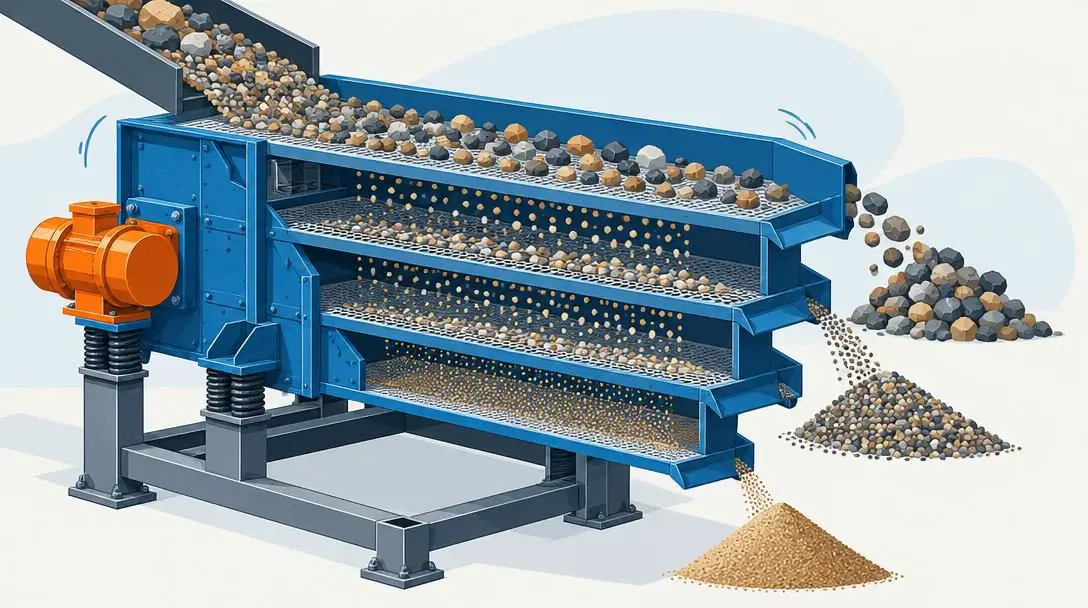
Vibratory screens operate in tandem with or downstream from trommels, using high-frequency oscillating motors attached to tiered mesh decks. The rapid shaking motion spreads the excavated stream evenly across the screen surface, separating materials based on physical size and relative density. Vibratory screens effectively filter out lingering soil aggregates, isolate varied fractions of demolition debris, and prepare dry recyclables for targeted processing.
| Equipment | Primary Operational Role | Target Waste Stream |
|---|---|---|
| Mass excavators | Bulk earthmoving and extraction | Compacted cover soil and mixed underground refuse |
| Large magnets | Automated ferromagnetic recovery | Iron, steel, and associated ferrous metal scrap |
| Trommels | Rotary size-based screening | Soil, fine decomposed matter, and oversized items |
| Vibratory screens | High-frequency fractional separation | Debris fractions, aggregate remnants, and plastics |
Environmental and Practical Benefits
The primary operational advantage of landfill mining is the immediate restoration of physical storage space. By extracting massive volumes of plastics, metals, and inert construction waste from old cells, operators create void space that can be repurposed for non-recyclable residual waste. This process drastically extends the operating lifespan of existing facilities, delaying or eliminating the need to clear pristine land for new disposal infrastructure.
From an ecological standpoint, the practice reintroduces valuable secondary raw materials back into industrial manufacturing networks, curtailing the energy and greenhouse gas footprints tied to virgin mineral extraction. Furthermore, landfill mining acts as a critical line of defense for regional water security. Over decades, buried hazardous materials—including single-use alkaline cells, lithium batteries, and commercial solvent containers—eventually break down, creating toxic chemical brews that can breach containment barriers.
Excavating buried waste not only reclaims valuable domestic commodities, but it also shields vital groundwater reserves from deteriorating toxic hazards.
By mechanically unearthing historical disposal trenches, site operators can locate and remove these deteriorating hazards before toxic chemicals seep downward into subterranean aquifers. Preventing groundwater contamination protects municipal drinking supplies and preserves neighboring aquatic ecosystems from persistent chemical degradation.
Economic Challenges and Atmospheric Hazards
Despite its theoretical appeal, landfill mining is not an effortless or universally viable solution. Deploying heavy earthmoving machinery, fueling industrial sorters, and managing complex material logistics demand tremendous amounts of capital. The economic viability of any excavation campaign relies directly on fluctuating secondary scrap markets; if commodity prices for recycled steel or reclaimed polymers drop, the revenue generated from salvaged goods may fail to offset steep operating expenses.
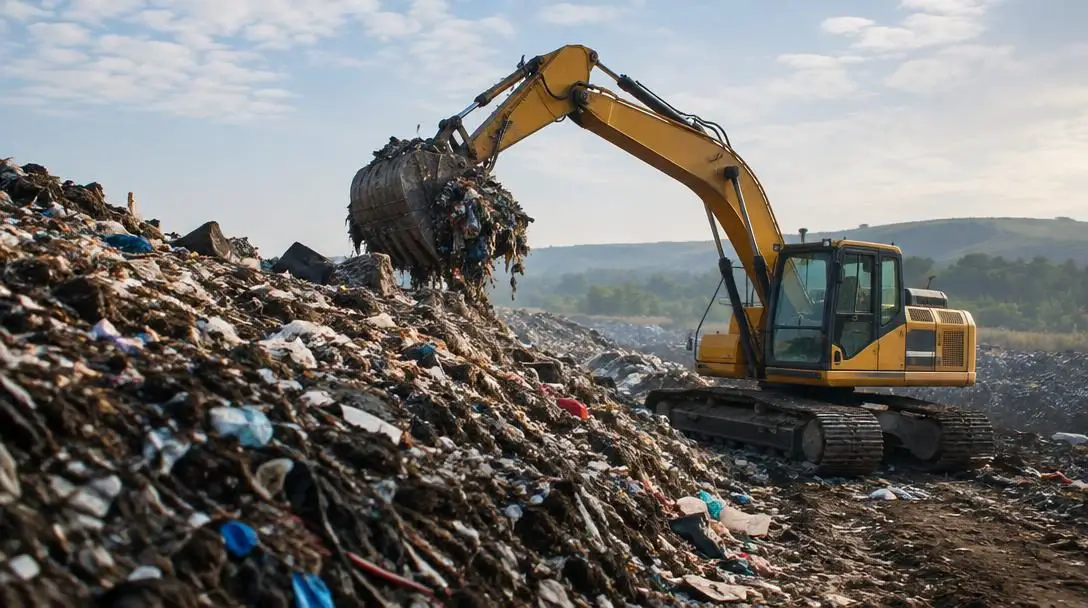
Beyond fiscal hurdles, unsealing buried landfill cells poses substantial atmospheric hazards. When organic matter decomposes beneath layers of dense earth without access to oxygen, it produces large volumes of subterranean methane gas. Breaking through sealed surface caps can trigger rapid, uncontrolled releases of methane directly into the atmosphere, counteracting the environmental benefits of material reclamation. Until containment equipment and gas-capture technologies are standardized, extensive research remains necessary before landfill mining can serve as a risk-free municipal tool.
Everyday Steps to Divert Waste at the Source
While industrial landfill mining methods continue to develop, reducing waste generation at the consumer and commercial levels remains the cleanest and most cost-effective way to preserve disposal capacity. Preventing items from entering municipal burial sites preserves valuable land and prevents toxic chemical accumulation.
- Sort clean paper, clean cardboard, rigid plastics, and scrap metal into dedicated residential recycling bins rather than throwing them into mixed household trash.
- Identify domestic hazardous materials, keeping alkaline batteries, rechargeable lithium cells, automotive fluids, and consumer electronics separate from everyday garbage bags.
- Transport hazardous household goods to licensed municipal collection depots or take-back kiosks designed to manage chemical compounds safely.
- Choose durable, reusable household goods over single-use packaging to decrease the total volume of trash leaving your property.
- Participate in community recovery initiatives and advocate for local government investment in modern mechanical recycling infrastructure.
Common Waste Handling and Disposal Mistakes
Well-meaning consumers frequently undermine waste diversion initiatives through small, everyday handling errors. Recognizing common disposal mistakes prevents processing bottlenecks at mechanical facilities and keeps toxic chemicals out of ordinary disposal trenches.
- Throwing batteries into residential trash cans: Discarding batteries alongside common refuse introduces reactive heavy metals and acidic compounds directly into landfill cells, where they degrade and threaten underlying groundwater basins.
- Introducing food-soiled packaging into recycling bins: Placing grease-stained cardboard or unrinsed plastic containers into recycling receptacles contaminates entire collection batches, often forcing sorting centers to divert clean recyclables into disposal sites.
- Assuming collection workers separate mixed trash manually: Believing that sanitation teams will pick through ordinary garbage to extract valuable metals leads individuals to abandon source separation, leaving scrap buried under dirt.
- Pouring household chemicals into household drains or garbage: Discarding leftover paints, chemical solvents, or concentrated pesticides into routine waste introduces volatile chemical compounds that complicate site safety and elevate leaching risks.
- Underestimating the power of small individual choices: Assuming that personal waste generation is too negligible to influence municipal trends ignores the cumulative impact created when millions of people discard recyclable materials daily.
Key Strategic Considerations for Future Projects
As communities assess whether to pursue active landfill excavation, regional planners and municipal leaders must weigh several intersecting factors before moving forward with large-scale projects:
- Local scrap market demand: The commercial feasibility of an excavation project hinges on ready access to regional metal processors, plastics recyclers, and stable pricing for secondary commodities.
- Methane monitoring and gas capture: Operations must deploy comprehensive atmospheric monitoring tools and negative-pressure extraction hoods to prevent volatile methane emissions from escaping into neighboring airsheds.
- Severity of local water risks: When historical landfills sit over unconfined aquifers or close to municipal drinking reservoirs, the urgent need to remove deteriorating toxic hazards may justify the steep financial costs of mechanical excavation.
- Strengthening upstream diversion: Mining buried waste addresses past mistakes, but long-term environmental protection depends on robust community recycling programs that intercept materials before they ever reach a burial trench.
Frequently asked questions
What is landfill mining?
Landfill mining is the industrial process of excavating, sorting, and processing previously buried solid waste from landfills. It aims to recover recyclable raw commodities, reclaim valuable land, and remove toxic environmental hazards.
Why are municipal landfills running out of physical room?
Global refuse production surpasses two billion tons each year. Because societies traditionally buried discarded items permanently—including vast quantities of recyclable metals and plastics—landfills have reached maximum capacity faster than new facilities can be permitted and built.
What types of machinery are used to excavate and sort landfill materials?
Operations depend on mass excavators to unearth dense, compacted refuse, large overhead magnets to capture ferrous scrap, rotating trommels to separate fines and soils by size, and vibratory screens to classify various material fractions.
Can excavating landfills harm the surrounding environment?
Yes. Disturbing settled, compacted waste cells can release sudden bursts of trapped methane gas, which is produced when organic matter decomposes without oxygen. Excavation can also generate offensive odors and dislodge hazardous chemicals if not managed with strict controls.
How does landfill mining protect local drinking water?
Older landfills often contain hazardous consumer items like lead-acid and lithium batteries, consumer electronics, and toxic solvents. Excavating and safely isolating these items prevents heavy metals and corrosive chemicals from leaching into underlying groundwater reserves.
The bottom line
Landfill mining represents an inventive, forward-thinking approach to two of modern civilization's most intractable challenges: resource scarcity and overflowing waste infrastructure. By viewing historical garbage heaps as accessible reserves of raw commodities and reclaimable land, communities can potentially extend the lifespan of existing disposal sites while capturing valuable scrap metals and plastics. Furthermore, unearthing deteriorating hazardous waste before it breaks down shields essential groundwater supplies from persistent contamination.
Nevertheless, the steep capital investments required to deploy industrial sorting systems, coupled with volatile scrap markets and the danger of releasing trapped methane gas, mean landfill mining is not a universal quick fix. While engineers continue refining excavation and emissions-control technologies, the most reliable and affordable way to protect our ecosystems remains stopping waste at the source. Careful household separation, responsible battery disposal, and consistent participation in local recycling systems ensure that valuable resources never end up buried beneath the earth in the first place.