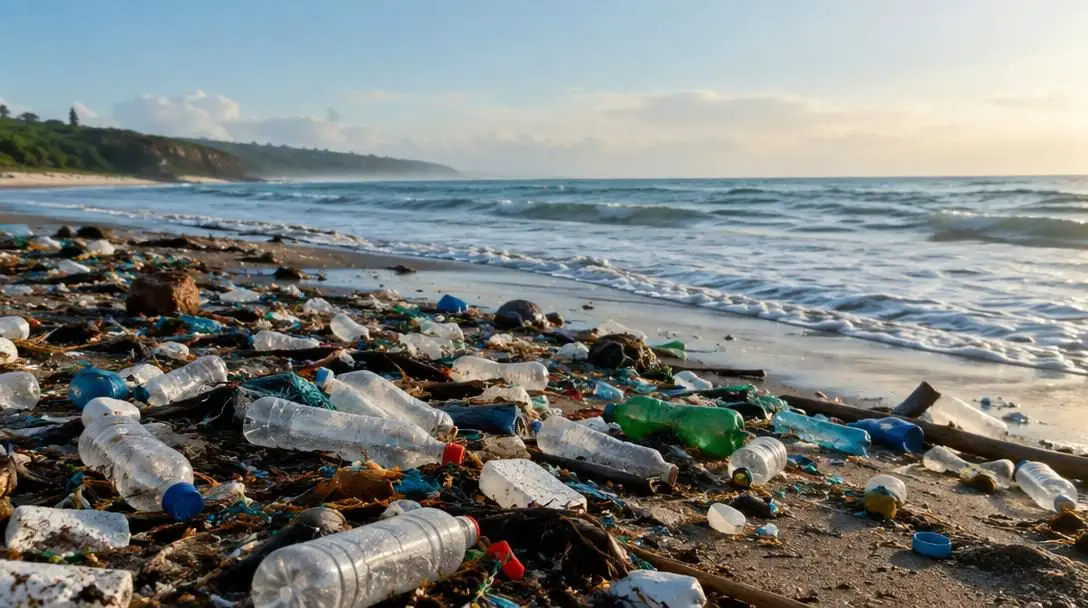
Landfill Mining: The Future Of Resource Extraction?
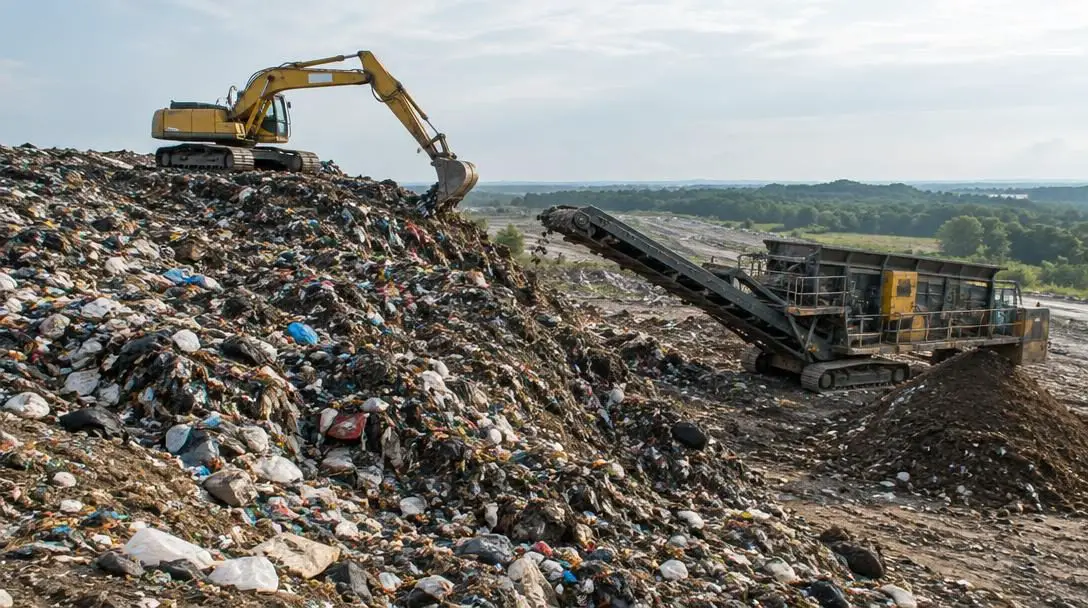
For more than half a century, the standard municipal response to consumer discard has been straightforward: dig a trench, tip thousands of tons of garbage into it, and bury the problem out of view. As consumer economies accelerated and urbanization surged, this out-of-sight strategy turned massive tracts of land into sprawling, unmonitored liabilities. Modern municipal dumps contain everything from discarded electronic goods and scrap metal to hazardous industrial chemicals, creating long-term environmental hazards that threaten surrounding ecosystems, soil chemistry, and underground aquifers.
Today, mounting resource shortages and climate pressures are prompting researchers, engineers, and municipal planners to reconsider these burial grounds. Instead of treating closed dumping grounds purely as permanent environmental hazards, a growing industry is exploring landfill mining. By unearthing, screening, and processing decades of accumulated municipal solid waste, developers are discovering that yesterday's municipal dumps can serve as unexpected reservoirs for scrap metal, secondary building aggregate, and clean fuel alternatives.
Key takeaways
- Landfill mining unearths and sorts buried waste to recover recyclable metals, isolate clean energy feedstocks, and restore degraded land.
- Decomposing garbage makes landfills the third largest cause of methane pollution worldwide, posing serious climate and public health risks.
- Recovering aluminum remains the most economically lucrative target, with the potential to save the United States up to $400 million each year.
- Emerging projects are coupling resource extraction with advanced technologies, converting solid waste and methane into clean hydrogen or power for computation.
- Safe execution demands strict hazard controls to avoid subterranean fires, chemical leaching, and dangerous atmospheric emissions.
The environmental crisis beneath our feet
The urgency behind landfill remediation stems directly from the acute ecological hazards posed by conventional disposal sites. Unmanaged landfills represent the third largest cause of methane pollution across the globe. Methane is a potent greenhouse gas that traps substantial heat within the atmosphere, accelerating climate disruption far more aggressively than equivalent volumes of carbon dioxide over short timelines. In unlined or aging sites, subterranean decomposition produces methane pockets that can migrate underground, leak into neighboring foundations, or spark stubborn subsurface fires that prove difficult to suppress.
The dangers are not confined to atmospheric emissions. Decades of unmonitored disposal allowed hazardous household waste, industrial solvents, and discarded manufactured goods to mix indiscriminately with organic debris. Rainwater percolating through these unsealed mounds leaches toxic chemicals, heavy metals, and carcinogens down toward water tables. Contaminated groundwater plumes linked to older dumps have been documented as public health threats connected to cancer clusters and chronic illnesses in surrounding communities. Remediation is no longer merely a matter of reclaiming real estate; it is an urgent public health imperative.
Instead of leaving valuable commodities trapped underground forever, landfill mining transforms an escalating ecological liability into an active source of secondary raw materials.
How landfill mining works
The core philosophy of landfill mining is straightforward: rather than continually piling fresh discard on top of older waste bodies, operators systematically exhume the buried mass, extract everything of economic or energetic utility, and safely re-contain any residual inert matter. Transforming a chaotic, aged dump into segregated, marketable resources requires specialized civil engineering techniques and mechanical separation systems designed to handle complex, heterogeneous debris.
Operations generally prioritize four primary technical processes to safely process the waste mass:
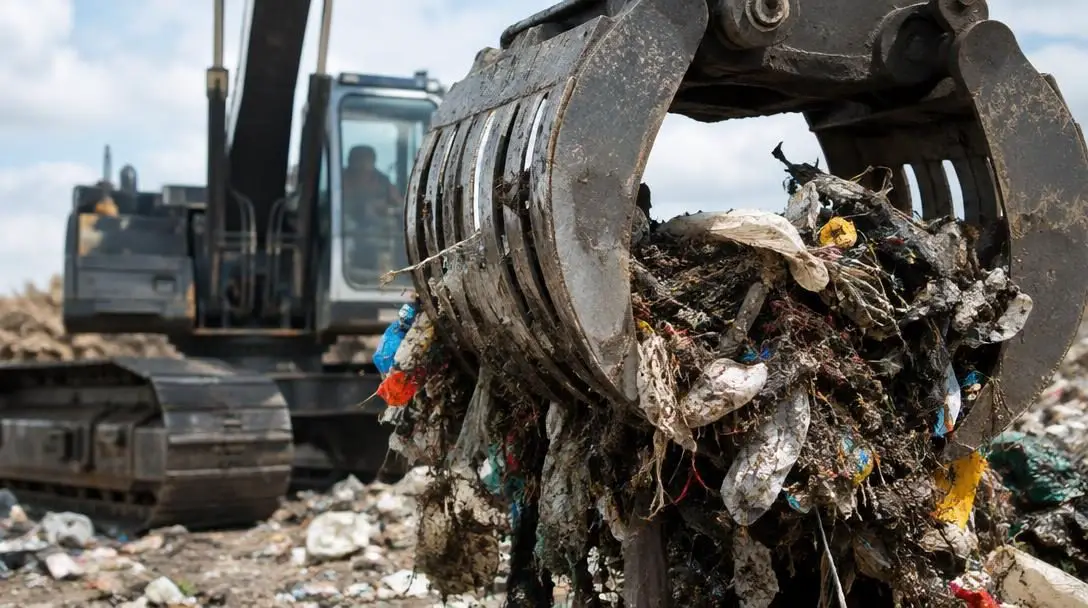
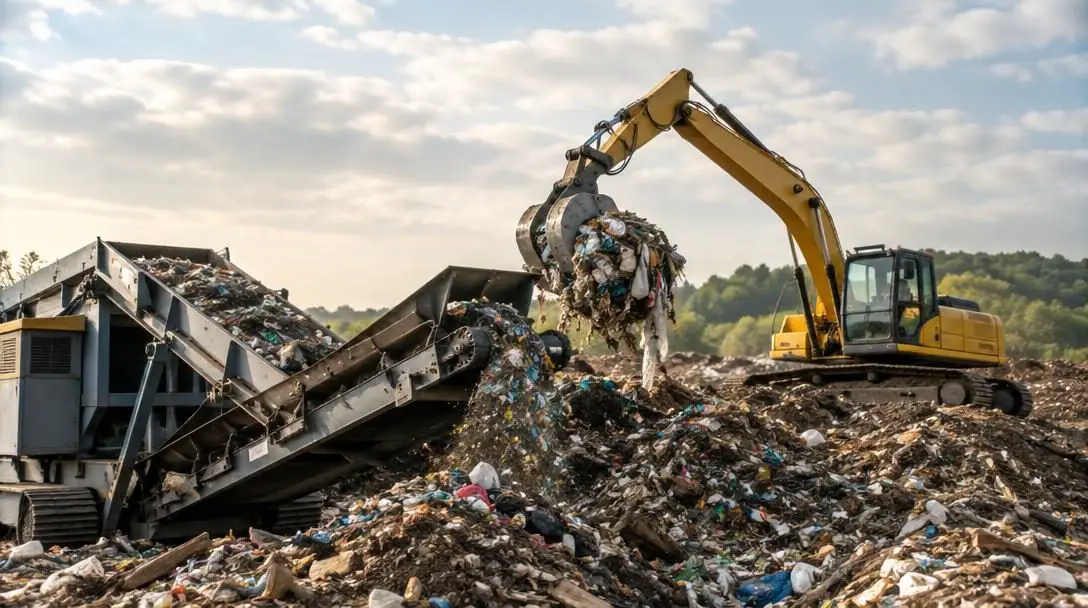
- Excavation: Heavy civil machinery, primarily tracked excavators, methodically cuts through accumulated layers. Engineers typically direct operators to work along carefully mapped trenches or from the bottom to the top of the waste face to minimize the risk of slope collapse and control localized odor emissions.
- Magnetic separation: Industrial electromagnets suspended above high-speed conveyor belts automatically sweep ferrous components out of the exhumed waste stream. This pulls structural steel, iron casings, and scrap parts out of the rubble before materials proceed to secondary refining.
- Mechanical sifting: Trommels and multi-deck vibratory screens divide excavated waste by particle size. Fine degraded soil, known as landfill daily cover, is separated from bulk items like intact polymers, heavy stones, and non-ferrous metals.
- Gas capture and energy conversion: Advanced projects tap into decomposing waste pockets before and during excavation. Instead of venting volatile gases, systems route harvested methane straight into combustion turbines or thermo-chemical reactors to generate power on site.
Valuable commodities recovered from landfill deposits
Excavating a landfill is an expensive, labor-intensive industrial task. The financial viability of any mining venture rests largely on the quality and market value of the commodities pulled from the ground. Because metals resist natural microbial degradation, decades of burial leave their fundamental structural and chemical properties largely intact.
| Commodity | Preservation State Underground | Primary Industrial Application | Economic & Recovery Feasibility |
|---|---|---|---|
| Aluminum | Highly durable, zero degradation | Cans, transportation, construction | Highest recovery value; requires minimal refining energy |
| Structural Steel & Iron | Surface oxidation, core intact | Re-smelting, heavy manufacturing | Easily captured in bulk using overhead industrial magnets |
| Copper & Zinc | Non-ferrous stability, light corrosion | Electrical wiring, plumbing, alloys | High market price offsets intensive manual and eddy-current sorting |
| Reclaimed Cover Soil | Mineralized organic blend | Daily site cover, civil grading | Eliminates the expense of trucking fresh aggregate to project sites |
Aluminum
Among all materials entombed in municipal waste, aluminum represents the single most lucrative target. Unlike organic matter, aluminum does not rot, and unlike untreated carbon steel, it does not rust away in moist environments. As a result, discarded containers, siding, and frames remain fully salvageable decades after disposal. Because melting recycled aluminum requires only a tiny fraction of the electrical energy needed to extract virgin metal from bauxite ore, processing reclaimed scrap offers immense economic upside.
The financial losses associated with burying this resource are staggering. In 2020 alone, an estimated $800 million worth of aluminum was discarded into municipal trash streams across the United States rather than recycled. Industry expert Dr. Subodh Das has noted that through systematic landfill mining, the United States could recover up to $400 million per year in salvageable aluminum alone, substantially reducing domestic dependence on imported raw ore.
Scrap Copper, Zinc, and Steel
Beyond aluminum, deep excavation brings up valuable reserves of scrap iron, structural steel, copper piping, and zinc hardware. Ferrous elements like steel and iron represent a massive fraction of industrial debris and are easily segregated using high-power magnetic separation equipment. Non-ferrous copper and zinc require secondary processing, such as eddy-current separators and density-based float tables, but their high spot-market values provide essential revenue buffers that help balance operational expenses.
Pioneering projects and energy breakthroughs
Landfill mining is shifting from an academic concept to practical implementation around the world. Projects vary from ecological restoration efforts designed to build public parks to advanced energy generation facilities producing clean hydrogen and computing power.
Ariel Sharon Park
- Location: Israel
- Historical significance: Pioneer of 1950s landfill mining trials
- Primary objective: Waste remediation and park conversion
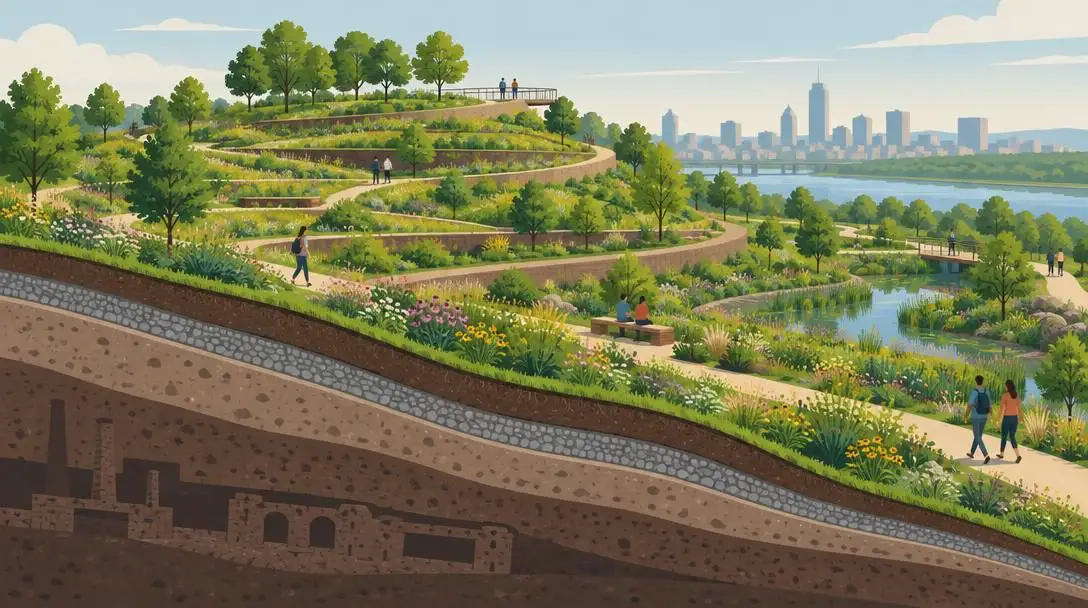
The concept of digging into old garbage is not entirely novel. In the 1950s, the site that is now known as Ariel Sharon Park in Israel served as an early testing ground for landfill excavation. Engineers excavated layers of aged waste to stabilize surrounding slopes, eliminate foul odors, and remediate the immediate environment. Today, the location stands as a benchmark for turning a contaminated urban dumping ground into a flourishing public park and ecological asset, showing how brownfield rehabilitation can restore urban habitats.
The Oman Waste-to-Hydrogen Project
- Location: Oman
- Estimated investment: $1.4 billion
- Output mechanism: Zero-combustion thermo-chemical conversion
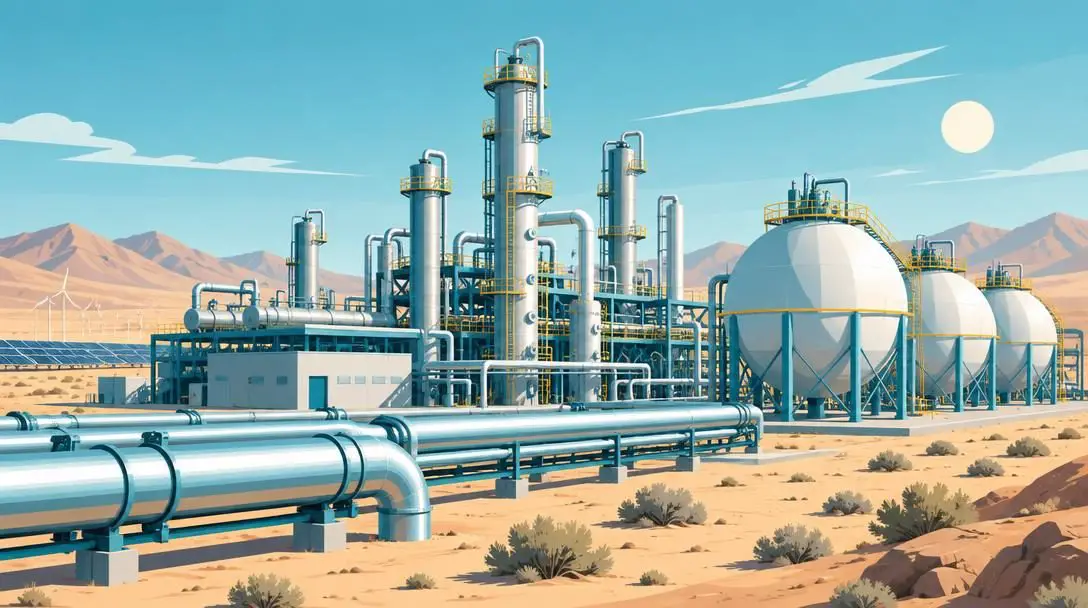
In Oman, an estimated $1.4 billion initiative is pioneering the use of landfills as fuel production hubs. The facility is engineered to process solid municipal waste into clean hydrogen fuel. Rather than relying on standard incineration methods, which create emissions concerns, the Oman installation deploys a specialized thermo-chemical process. This system operates without burning waste or drawing external power, showing how unrecyclable solid waste streams can be converted into clean-burning hydrogen for regional industry.
Landfill-Powered Bitcoin Mining
- Primary fuel: Harvested landfill methane
- Technology: Direct-drive combustion turbines
- Operational focus: Off-grid computational infrastructure
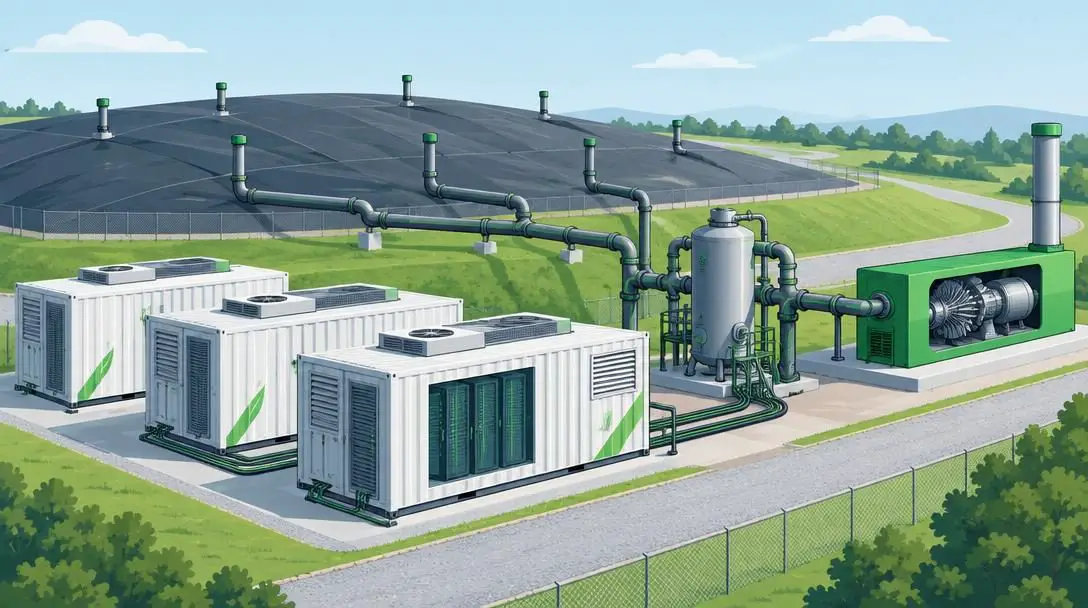
Cryptocurrency firms have also forged partnerships with waste managers to tackle unmitigated methane leaks. One energy company raised millions of dollars to build an off-grid Bitcoin mining platform powered by landfill gas. Instead of allowing volatile methane to escape into the atmosphere or flaring it without energetic use, the project funnels captured gas into on-site combustion turbines. These turbines produce continuous electricity to power computational mining hardware, creating a profitable use for gas reserves that are too remote or impure to pipe into municipal power grids.
Step-by-step: How a landfill mining project is executed
Because unearthing decomposing municipal waste presents significant chemical and logistical challenges, projects must follow a strict, phased engineering pathway.
- Historical assessment and characterization: Engineers examine old municipal dumping manifests, aerial surveys, and core drill samples to map what was buried across the parcel, identifying zones rich in metal and pinpointing potential pockets of toxic sludge.
- Gas mitigation and infrastructure setup: Extraction wells, negative-pressure collection pipes, and atmospheric monitors are installed. These systems capture volatile methane and route it to on-site turbines, preventing gas build-up before the cap is broken.
- Targeted excavation: Heavy machinery opens trenches into mapped sectors. Crews typically work systematically from bottom to top to reduce the risk of structural slope failure and contain dust and odor.
- Mechanical screening and physical separation: Excavated matter passes through trommels to isolate soil cover. High-power magnets lift out ferrous metals, while specialized eddy-current separators isolate aluminum, copper, and zinc from bulk plastics.
- Energy and chemical conversion: Non-metallic, non-recyclable solid residues are diverted into thermal or thermo-chemical platforms, such as Oman's hydrogen facility, to extract fuel without direct combustion.
- Site reclamation and closure: Unusable inert residues are transferred into modern lined cells with leachate barriers, or the site is backfilled, contoured, and safely sealed off for public park redevelopment.
Common mistakes and hazards to avoid
Digging into historical landfills carries considerable operational risk. Failing to plan for buried hazards can lead to ecological damage, worker injuries, or financial failure.
- Failing to account for toxic contaminants: Unregulated dumping historically allowed carcinogens, chemical drums, and heavy industrial waste to mix with municipal garbage. Rupturing corroded barrels during excavation can release dangerous fumes or poison local water tables.
- Mishandling methane accumulation: Because landfills are the world's third largest cause of methane pollution, excavating into enclosed waste pockets without active venting risks causing flash fires or dangerous gas explosions.
- Using inadequate separation technology: Trying to sort exhumed materials with basic manual labor or low-powered magnets yields contaminated scrap piles. Scrap contaminated with grit and dirt commands significantly lower prices on regional metal exchanges.
- Ignoring community health and odor controls: Exhuming decomposing garbage releases severe odors, dust, and bioaerosols. Operations that fail to deploy perimeter misting and odor suppression face immediate public backlash and regulatory shutdowns.
- Underestimating heavy machinery costs: Heavy equipment maintenance, diesel consumption, and continuous sorting operations carry steep overhead. Banking on volatile metal prices without factoring in these operating costs can push projects into bankruptcy.
Frequently asked questions
Is landfill mining financially profitable?
Financial viability depends entirely on the composition of the buried waste and local commodity markets. Sites with high concentrations of non-degraded metals like aluminum and copper offer the strongest returns. Dr. Subodh Das estimates that the United States could reclaim up to $400 million annually in aluminum alone, though projects must balance these commodity values against the steep operating costs of heavy excavation and environmental controls.
Why is aluminum the primary material targeted during excavation?
Aluminum does not rot or degrade during prolonged burial, meaning its structural integrity remains largely unchanged. Furthermore, reprocessing salvaged aluminum requires only a small fraction of the energy needed to refine virgin bauxite ore, making reclaimed aluminum one of the easiest, cleanest, and most lucrative commodities to sell back to manufacturers.
How does landfill mining help combat global climate change?
Landfills are the third largest source of methane pollution across the globe. By opening unmanaged landfills, tapping trapped gas pockets for energy, and stabilizing decomposing matter, mining operations help stop unchecked methane leaks while also reclaiming land that can be remediated for public use.
What happens to the waste that cannot be recycled or turned into fuel?
Materials that cannot be recovered, recycled, or converted through thermo-chemical systems are consolidated and redeposited into modern, highly regulated sanitary containment cells equipped with thick impermeable liners, leachate treatment plumbing, and continuous environmental monitoring.
Can landfill waste be processed without burning it?
Yes. Emerging facilities, such as the $1.4 billion project under development in Oman, use advanced thermo-chemical processes to convert solid municipal waste into clean hydrogen fuel without direct combustion or external electricity, avoiding the toxic emissions tied to conventional incinerators.
The bottom line
Landfill mining transforms our perspective on human waste, recasting historical dumping grounds not as permanent eyesores, but as secondary resource caches. While exhuming municipal dumps requires rigorous engineering controls to manage methane hazards and toxic chemicals, the rewards are undeniable. From recovering hundreds of millions of dollars in pristine aluminum to producing hydrogen and remediating ground for urban green spaces, landfill mining offers a sensible path to cleaning up the past while reclaiming valuable resources for the future.