Master the Great Outdoors: 5 Essential Skills for Orienteering Like a Pro

Orienteering is a captivating outdoor sport that challenges participants to navigate across unfamiliar, diverse terrain using only a detailed topographical map and a magnetic compass. Rather than following marked recreational trails, navigators must plot and travel their own courses across rolling woodlands, open fields, and rugged hills to locate designated checkpoints, traditionally referred to as control points or marks. Successfully completing a course requires far more than basic gear; it demands physical stamina, sharp mental focus, and the real-time ability to interpret the three-dimensional wilderness from a flat sheet of paper.
While mastering the fundamentals of reading compass bearings and understanding map legends is the starting point, competitive and recreational navigators must develop a deeper repertoire of field techniques. The sport forces you to make critical route decisions at speed, constantly balancing directness against terrain difficulty. By cultivating foundational wilderness skills, you can transform what seems like an intimidating expanse of backcountry into an orderly, solvable puzzle.
Key takeaways
- Orienteering requires self-sufficiency and quick problem-solving without the aid of automated devices or marked trail signs.
- Identifying catching features behind checkpoints prevents navigators from wandering off course and confirms when a target has been overshot.
- Following linear guideposts, or handrails, reduces navigational fatigue while maintaining reliable forward momentum.
- Intentionally aiming off toward a recognizable baseline eliminates the risk of missing isolated control points in featureless expanses.
- Active sensory engagement—including listening for water, smelling exhaust, and feeling slope angles—provides vital navigational clues.
How Orienteering Works in Practice
An organized orienteering event presents participants with a start line, a sequence of control sites, and a finish line. Depending on the format, navigators may need to visit these control points in a strictly specified order or locate as many as possible within an allotted timeframe in a freeform score challenge. At the start, organizers supply a specialized topographical map detailing elevation changes via contour lines, vegetation density, water features, human-made infrastructure, and open clearings.
Unlike standard trail hiking, orienteering frequently demands off-trail travel through dense growth, rocky slopes, and marshland. A straight line between two checkpoints on paper is rarely the quickest or safest route in practice. Navigators must weigh the energetic cost of climbing a steep ridge against the time required to contour around its base, or decide whether traversing an open agricultural area is faster than pushing through thick briars. By evaluating linear elements, changes in grade, and terrain boundaries, participants maintain an ongoing dialogue between the map and the physical world.
Five Core Skills for Wilderness Navigation
Moving from a beginner who slowly trudges between marks to a confident navigator requires mastering five tactical strategies. These methods simplify complex route planning, keep you oriented under physical stress, and prevent costly navigational errors.
Self-Sufficiency
Whether you compete as an individual runner or navigate as part of a cooperative team, self-sufficiency is the bedrock of orienteering. In this discipline, there are no turn-by-turn voice prompts, digital screens, or trail markers to validate your decisions. Every tactical choice—evaluating your pace, selecting a line of travel, interpreting ambiguous landforms, and solving route dilemmas—rests entirely on your own judgment.
Navigating through the backcountry fosters genuine self-reliance. Facing a disorienting stretch of woods as daylight fades quickly teaches you to remain calm, control your breathing, and trust your training. By approaching every section of the course with composure and independence, you reduce the likelihood of making panicked errors when terrain turns rough or an expected path fails to appear.
Knowing When You Have Passed the Checkpoint
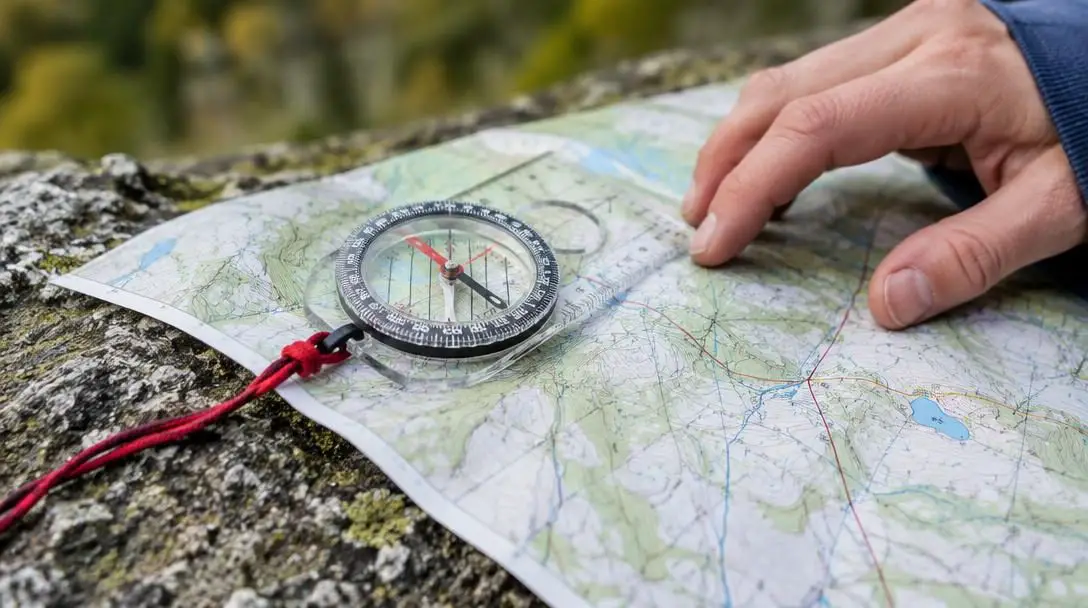
Recognizing that you have overshot your target is just as crucial as knowing when you are traveling along the correct bearing. In orienteering terminology, a catching feature is a prominent, unmistakable landscape element positioned beyond your target that alerts you when you have traveled too far in a given direction.
Catching features can take many forms across varied landscapes. They include sharp elevation changes, distinct treelines, active streams, established walking paths, paved or unpaved roads, dirt piles, agricultural corn fields, and long boundary fence lines. Before leaving a known position to search for a hidden control point, an experienced navigator always checks what lies directly behind the target on the map. If you reach that designated feature, you immediately know you have overshot the mark and must reverse your direction. Far from being a failure, encountering a catching feature provides a definite line of position, serves as a vital safety buffer, and stops you from straying outside the course boundaries.
Following Natural Guideposts
Trying to navigate solely by dead reckoning—following a compass bearing blind across dense brush—is mentally exhausting and invites drift. To conserve cognitive energy and maintain speed, skilled navigators travel along linear guideposts, frequently called handrails. These are continuous, easily identified landscape features that run parallel to or directly toward an intended destination.
A handrail can be a babbling stream, an old rusted fence line, a logging track, or a maintained trail. While a guidepost may not lead you straight to the tiny flag marking the control point, it will carry you quickly and safely into the immediate vicinity without requiring constant compass checks. As you gain field experience, you will learn to spot subtle guideposts that others overlook, including shallow ravines, transitions between distinct forest tree types, or faint paths etched into the dirt.
Aiming Off to Hit the Mark
Course setters frequently place control points on isolated features within expansive, uniform landscapes—such as a single boulder in a vast forest or a small depression in a wide-open meadow. Attempting to march directly on an exact compass heading across a featureless zone often results in missing the target by mere yards. If you arrive and see nothing, you face a frustrating dilemma: you do not know whether the mark lies just out of view to your left or to your right.
To eliminate this uncertainty, navigators use a technique called aiming off. Instead of targeting the point directly, you intentionally set your bearing slightly to the left or right toward an unmistakable linear feature or catching feature nearby. When you intersect that prominent baseline, you know with absolute certainty which direction to turn along the line to home in on the checkpoint. Deliberately aiming off removes guesswork, prevents aimless circular searches, and saves valuable time.
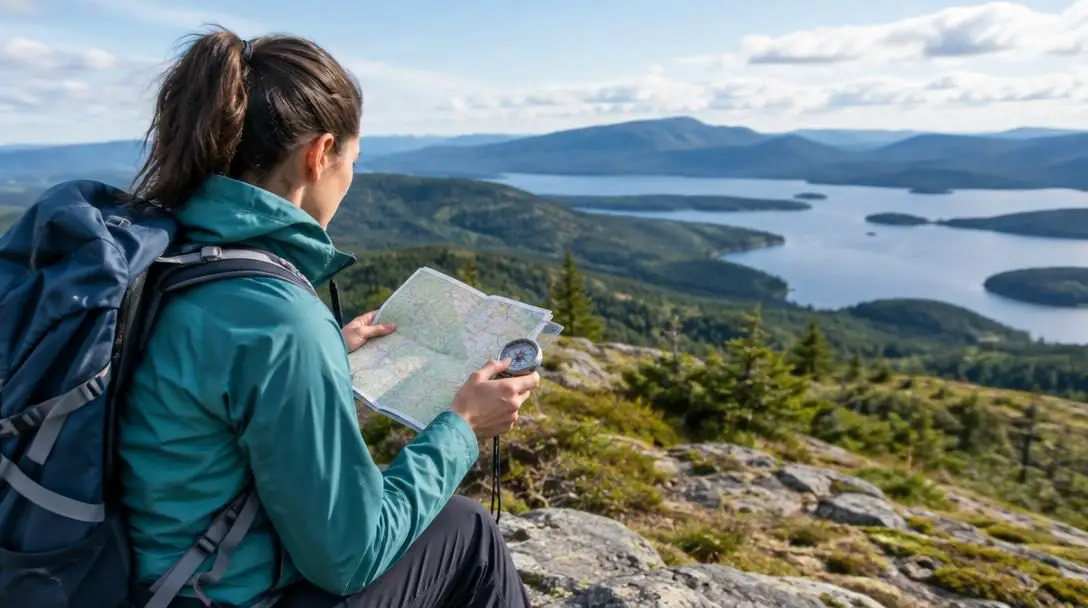
In orienteering, stopping for a brief moment to get your bearings will always save more time than rushing blindly through the wilderness.
Always Observing Your Surroundings
Fixating solely on a compass dial or staring continuously at a map disconnects you from the living environment. Successful navigators maintain active sensory observation, taking in clues through sight, sound, touch, and smell to confirm their exact position.
Your ears can detect the faint rumble of a running creek or the sound of traffic along a boundary highway long before the water or road comes into view. Your nose can register the scent of a blooming wildflower meadow or the odor of diesel exhaust drifting from nearby heavy machinery or a paved thoroughfare. Through your legs, you can physically feel changes in grade, registering subtle elevation shifts plotted as contour intervals on your map. Visually, scanning your surroundings helps you spot animal transit routes; narrow deer trails provide convenient paths of least resistance through thick brambles that might otherwise slow you down.
Navigational Techniques at a Glance
The table below summarizes the four primary navigational concepts used in field orienteering, outlining how each strategy functions and when to deploy it.
| Technique | Primary Purpose | Typical Landscape Examples | Key Tactical Benefit |
|---|---|---|---|
| Catching Features | Identify when you have overshot a target | Roads, streams, distinct ridges, treelines, fence lines | Acts as a definitive backstop and safety buffer |
| Linear Guideposts | Provide steady, low-effort guidance toward a target | Trails, stone walls, creeks, dirt tracks, ravines | Reduces cognitive strain and compass micromanagement |
| Aiming Off | Eliminate directional ambiguity near hidden marks | Base lines, field edges, prominent ditches, tracks | Guarantees you know which way to turn upon arrival |
| Sensory Awareness | Detect subtle environmental signals across terrain | Audible water, slope gradients underfoot, deer paths | Confirms position without relying solely on map symbols |
Step-by-Step Course Execution
Navigating from one control point to the next requires a structured routine. Practicing these sequential steps helps you stay composed and systematic throughout an orienteering course:
- Orient your map immediately to magnetic north using your compass so the symbols align with the landscape around you.
- Locate your current position on the map and identify the exact circle marking your next destination.
- Scan the terrain between points to find linear guideposts, such as trails, fence lines, or drainage corridors, that lead toward the checkpoint.
- Identify an unmistakable catching feature situated behind or adjacent to the checkpoint to serve as an automatic stopping boundary.
- Decide whether to navigate directly or intentionally aim off toward a nearby baseline to ensure you know which way to search upon arrival.
- Travel along your chosen route while keeping your head up, monitoring elevation changes underfoot, and listening for environmental markers.
- Slow your pace as you enter the target circle, cross-reference identifiable local features, and punch your control card at the mark.
Common Navigational Pitfalls to Avoid
Even seasoned outdoor enthusiasts can make simple errors when navigating under physical fatigue. Staying mindful of these common mistakes will keep your outings safe and efficient:
- Continuous ground-gazing: Walking with your eyes locked onto your compass dial or paper map prevents you from noticing terrain cues, linear boundaries, and safety hazards ahead.
- Ignoring contour gradients: Overlooking subtle elevation changes underfoot can lead you to travel along the wrong contour line or ascend the wrong hillside.
- Neglecting your catching feature: Setting off toward a mark without checking what lies beyond it often causes navigators to wander deep into incorrect territory before realizing they have missed the point.
- Assuming straight features: Believing that every path, stream, or fence line follows a perfectly straight line can lead to confusion; always verify directional bends against your compass.
- Pushing forward when disoriented: Rushing ahead in the hopes of stumbling across a marker almost always deepens your error. The moment the terrain stops matching the map, stop moving.
- Bypassing animal corridors: Overlooking natural deer paths through thick vegetation forces you to fight through heavy brush, unnecessarily draining your physical energy.
Frequently asked questions
What equipment do I need to start orienteering?
To begin orienteering, you only need a baseplate compass, a specialized topographical map (typically provided by event organizers), sturdy trail shoes, and weather-appropriate outdoor clothing that protects against thorns and brush.
What is the difference between a handrail and a catching feature?
A handrail, or linear guidepost, is a feature that runs parallel to your direction of travel, guiding you safely toward a checkpoint area. A catching feature runs roughly perpendicular behind your target, acting as a backstop that clearly tells you if you have traveled too far.
Why shouldn't I just take a straight compass bearing directly to every checkpoint?
A straight line is rarely the fastest or easiest path in natural terrain. Direct lines can take you through dense briars, steep ravines, or impassable bogs. Furthermore, tiny bearing errors across long distances can cause you to miss an isolated control point completely.
How do animal paths help during an orienteering challenge?
Narrow corridors created by wildlife, such as deer paths, offer established, cleared routes through dense undergrowth. Utilizing them saves physical energy and speeds up your progress through heavy vegetation.
What should I do immediately if I realize I am lost?
Stop moving forward right away. Take a breath, orient your map to north, and think back to the last unmistakable feature you passed. Examine your immediate surroundings for identifiable landforms or catching features to relocate your position on the map before continuing.
The Bottom Line
Orienteering is more than a test of physical speed; it is an engaging masterclass in situational awareness, route strategy, and environmental problem-solving. By cultivating self-sufficiency, employing catching features, leaning on linear handrails, aiming off, and using all your physical senses, you turn the wilderness into a structured and navigational landscape. With a compass in hand and a map in front of you, every excursion into the woods becomes an opportunity to build enduring self-reliance and outdoor confidence.