The Great Outdoors: Five Things You Should Want From Your Hiking Shoes

Whether you are setting out for an afternoon ramble along a local nature path or preparing for an ambitious multi-day backcountry expedition, caring for your feet is the ultimate cornerstone of a safe, successful trek. Walking across wild terrain places demands on your lower body that an everyday walk around a paved neighborhood track simply cannot replicate. Hikers frequently carry substantial weight across uneven ground. Even a minimalist day pack loaded with water, calorie-dense food, and weather-ready clothing layers adds real stress to the body, while an expedition backpack can easily reach or exceed 20 percent of a hiker's total body weight. Every added pound transmits significant downward pressure through the knees, ankles, and feet with every single step.
Compounding this downward strain is the unpredictable, ever-shifting surface of the trail itself. A single route can expose your footwear to loose dirt, tangled roots, slick mud, granite slabs, and wet water crossings. Standard athletic sneakers designed for flat gym floors or predictable pavement lack the specialized architecture necessary to safeguard your feet. Investing in thoughtfully engineered trail footwear provides the necessary structural support, grip, and foot protection required to prevent painful acute injuries, chronic fatigue, and trail-ending discomfort.
Key takeaways
- Trail footwear must support significant downward pack weight while stabilizing joints across unstable, obstacle-strewn ground.
- High-performance hiking footwear relies on intentional engineering, specialized rubber lugs, and premium midsole compounds that resist collapsing.
- Footwear fit must account for normal physiological swelling during prolonged exertion to prevent blisters, bruised toenails, and numbness.
- Breathable materials and moisture management are critical for maintaining healthy skin and preventing painful hot spots on long treks.
- Proper selection requires trying on shoes late in the day with authentic trail socks and testing fit on both inclines and declines.
The Evolution of Modern Hiking Footwear
Decades ago, hikers relied almost exclusively on thick, rigid leather boots. While these heavy traditional designs offered immense physical armor against jagged rocks and trail debris, they came with severe drawbacks. They required weeks of agonizing break-in time, and their excessive weight contributed heavily to muscle fatigue over long mileage. Modern footwear manufacturing has dramatically shifted, pairing biomechanical research with advanced synthetic materials to build lightweight, supportive alternatives.
Today, the market offers a diverse spectrum of silhouettes, ranging from traditional high-cut boots that wrap the ankle to agile mid-cut designs and flexible, low-cut trail shoes. Despite differences in cuff height and weight, every design must meet the same fundamental biomechanical demand: shielding the intricate bones, ligaments, and skin of the human foot from harsh impacts and friction while navigating wild, uneven environments.
Five Essential Qualities to Demand From Your Hiking Shoes
Sorting through marketing claims requires focusing on the core functional characteristics that directly impact comfort, injury prevention, and foot health. When selecting footwear for day hikes or multi-day journeys, these five baseline performance factors should guide your decision.
Support and Stability
A secure, well-calibrated fit is essential when traversing natural obstacles, steep drops, and loose stones. Your footwear must feel snug without constricting circulation, locking your heel in place and guarding the ankle against sudden lateral rolls and twists. At the same time, the internal design must not produce hot spots—frictional pressure points where fabric rubs against skin, rapidly deteriorating into debilitating blisters.
True support comes from a contoured arch structure that distributes pack weight across the entire foot bed, coupled with an appropriately sized toe box. If the toe box is too narrow, your toes will jam against the front and sides of the shoe, particularly on steep descents. Furthermore, hiking causes natural physiological swelling as blood flow increases with prolonged exertion. Your shoes must offer enough volume to accommodate this expansion; footwear that fits too tightly in the store will cause bruised toenails, chafing, and numbness out on the trail.
Quality and Construction
Footwear is an area of outdoor equipment where buying budget options often proves costly. Durable, dependable trail shoes require high-grade raw materials, advanced adhesives, and meticulous engineering to endure harsh trail abrasion. Inexpensive casual shoes often utilize inferior midsole foams that crush under heavy pack loads, alongside thin textiles that shred when brushed against sharp rocks.
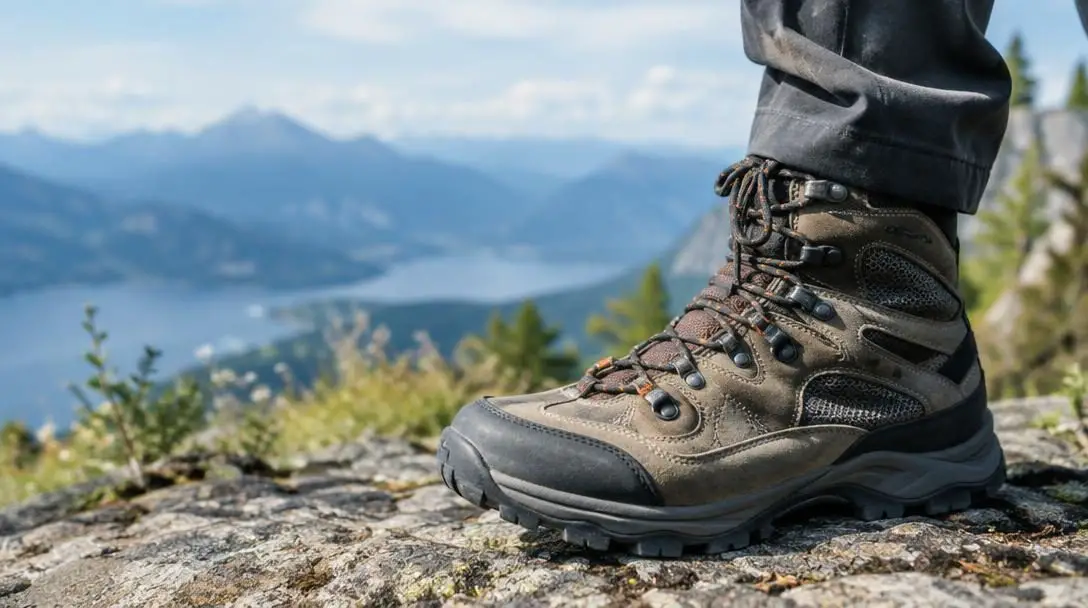
High-end manufacturers integrate specialized lightweight technologies that preserve stability while minimizing overall shoe weight. Features such as molded thermoplastic shanks and reinforced synthetic uppers deliver structural rigidity beneath the foot. This saves valuable energy across thousands of uphill strides without sacrificing the protective barrier your feet need.
Reliable Traction
Unlike indoor tennis shoes engineered for flat, dry floors, hiking footwear is built specifically to grip shifting, wet, and loose outdoor surfaces. Deep mud pits, wet river boulders, and angled granite slabs present dangerous slip hazards where a sudden loss of traction can cause serious joint sprains or falls.
According to CamoTrek, the two most frequent reasons for injuries on the trail are slipping and falling.
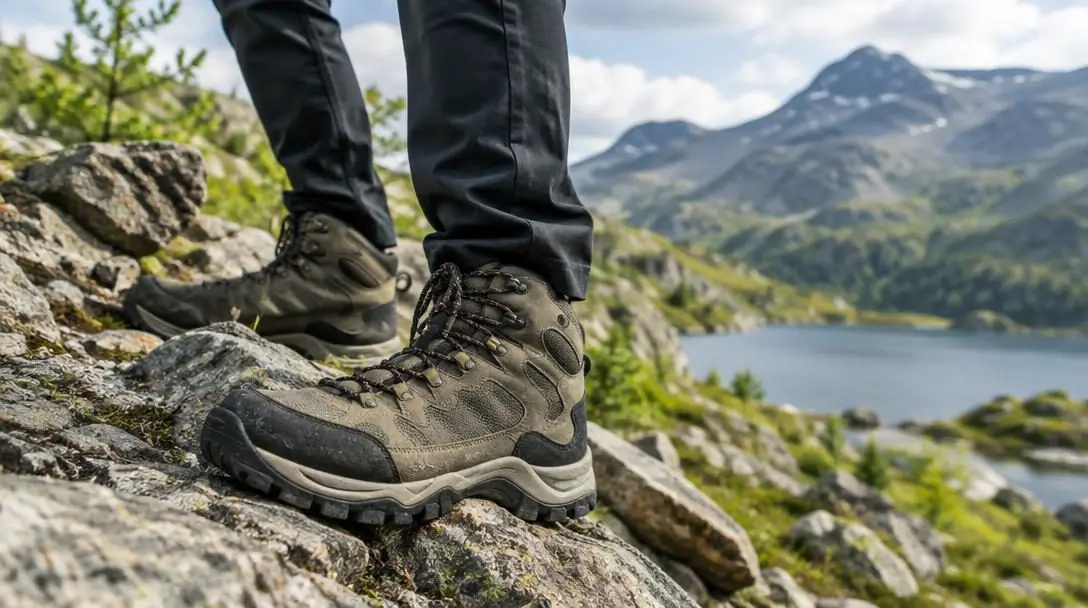
To keep you secure, trail shoes utilize specialized rubber outsoles molded with multi-directional tread patterns called lugs. These deep rubber channels bite down into loose dirt, scree, and mud, creating immediate mechanical grip during steep climbs and providing braking power when descending loose terrain.
Breathability and Moisture Management
Hiking generates significant cardiovascular exertion, causing feet to heat up and perspire heavily. Trapped sweat softens the outer layers of skin, weakening its structural integrity and leaving it vulnerable to friction blisters. Outdoor environments also introduce exterior wetness, such as rain, stream crossings, morning dew, and trail puddles.
An exceptional trail shoe maintains an active balance between keeping external water out and allowing internal heat and vapor to escape. Footwear with well-engineered ventilation vents internal humidity, repels light exterior liquids, and dries out promptly if submerged, keeping your skin dry and resilient over consecutive days of trekking.
Dynamic Flexibility
The human foot is naturally engineered to articulate and make micro-adjustments across uneven obstacles. Footwear should never act like an unforgiving plaster cast that locks your foot into complete immobility. While the shoe needs torsional stability through the midfoot to protect against twisting, it must maintain adequate forefoot flex.
This dynamic flexibility allows your foot to roll through its natural gait cycle, absorbing ground shocks and adapting when you step across angled roots or irregular boulders. Balancing protection with natural articulation helps prevent premature foot fatigue and maintains natural balance across unpredictable trail conditions.
At a Glance: Evaluating the Core Footwear Attributes
Understanding how these performance features safeguard your body helps clarify which attributes matter most for your specific hiking style and terrain.
| Attribute | Primary Trail Hazard | Key Structural Feature | Main Biomechanical Benefit |
|---|---|---|---|
| Support and Stability | Ankle rolls, twists, and hot spots | Contoured arch support and deep heel cup | Even pack-weight distribution and lateral joint control |
| Quality and Construction | Midsole collapse and material blowout | Thermoplastic shanks and reinforced uppers | Structural integrity under loads without excess weight |
| Reliable Traction | Slips, slides, and falls on slick rock | Deep, multi-directional outsole rubber lugs | Secure mechanical bite on loose scree and wet stone |
| Breathability | Sweat accumulation and softened skin | Ventilated meshes and moisture-wicking liners | Blister prevention through continuous vapor release |
| Dynamic Flexibility | Unnatural gait and muscle strain | Articulated forefoot flex zones | Smooth stride transitions over uneven trail obstacles |
The Anatomy of a High-Performance Hiking Shoe
A reliable hiking shoe is an assembly of specialized components, with each layer engineered to solve a particular trail challenge. Understanding how these layers interact helps you inspect footwear quality before you commit to a purchase:
- The Outsole: The foundation of the shoe, made from specialized rubber compounds formulated to adhere to wet stone and cold terrain. Its deep, widely spaced lug pattern channels mud away to maintain constant grip.
- The Midsole: The shock-absorbing engine situated directly above the outsole. It dampens impact forces and often incorporates composite or nylon shanks to resist sharp rock punctures and lateral twisting.
- The Insole (Footbed): The removable inner cushion resting beneath your sock. It supplies arch contouring, step-in comfort, and can be swapped for custom orthotics if needed.
- The Upper: The external shell covering the top and sides of the foot, composed of durable leather, synthetic weaves, or abrasion-resistant mesh. High-impact areas around the toes and heel often feature protective rubber rands.
- The Lacing System: A network of eyelets, webbing loops, and locking hooks that allows you to customize lace tension across the forefoot and collar, anchoring the heel to eliminate internal slippage.
Practical Steps for Selecting and Fitting Hiking Shoes
Because footwear shapes vary significantly between brands, finding the right pair requires hands-on evaluation. Follow this structured process to ensure an optimal fit before heading outdoors.
- Conduct initial research online by reviewing customer feedback, design specifications, and brand-specific sizing tendencies regarding wide or narrow fits.
- Visit an outdoor retailer in person, such as REI, to consult experienced staff who can measure your feet and present options matching your foot shape and trail goals.
- Try on footwear during the late afternoon or evening to account for the natural foot expansion that mirrors swelling experienced after hours on the trail.
- Bring the exact cushioned, moisture-wicking hiking socks you intend to wear outdoors rather than thin everyday cotton socks.
- Test prospective shoes on an inclined test ramp, ensuring your toes do not smash into the front on descents and your heels do not lift from the footbed during ascents.
- Review the store's return policy and test your new shoes indoors at home to confirm comfort before wearing them on rugged terrain.
Common Footwear Mistakes to Avoid
Even seasoned hikers can fall into traps when choosing or breaking in footwear. Staying aware of these frequent missteps will protect your feet from unnecessary trail injuries:
- Prioritizing aesthetics over fit: Choosing a shoe based on visual style or color rather than anatomical alignment and trail suitability guarantees discomfort.
- Underestimating pack weight: Attempting to carry heavy multi-day backpacking loads in ultra-minimalist, unsupportive footwear can overwhelm shoe midsoles and strain your arches.
- Ignoring hot spots: Pushing through early friction sensations without stopping to adjust lace tension, switch to dry socks, or apply protective tape quickly tears the skin.
- Skipping the break-in period: Taking brand-new shoes straight from the box onto an intense, multi-mile hike increases blister risks; wear them on short neighborhood walks first.
- Assuming your shoe size is static: Age, body weight changes, and repetitive athletic impacts cause feet to spread and arches to change shape over time.
Long-Term Foot Care and Gear Maintenance
Acquiring dependable hiking footwear is only the first step; maintaining foot comfort requires a comprehensive care strategy. Your footwear operates within an integrated system that includes high-performance socks and consistent gear hygiene.
Pair your footwear with socks knit from merino wool or synthetic technical fibers. These materials pull sweat away from the skin surface, working in tandem with the shoe's breathable membranes. It is always wise to keep an extra dry pair of socks packed in your day bag, allowing you to swap out sweaty or damp pairs during midday trail rests.
After returning from the trail, establish a regular shoe cleaning routine. Dried mud and dirt draw moisture out of synthetic textiles and leather, causing fabrics to stiffen, crack, and wear down prematurely. Rinse away caked-on dirt with cool water, brush debris from the outsole lugs, and allow your shoes to air dry naturally away from direct heaters or intense sun. Proper cleaning preserves rubber traction, maintains upper flexibility, and ensures your investment lasts for hundreds of miles.
Frequently asked questions
Can I hike in standard running or gym sneakers?
Standard running and gym sneakers are engineered for smooth, predictable surfaces. They lack the aggressive rubber lugs required to prevent slipping on mud or wet rock, and their flexible midsoles lack the support needed to bear the downward pressure of a backpack on uneven terrain.
Why do my toes hurt when walking downhill?
Toes jamming into the front of a shoe usually indicates that the footwear is too short, the toe box lacks sufficient volume, or the lacing system is not locking the heel securely in place. When testing shoes on a decline ramp, there should be clear space between your toes and the end of the shoe.
Do modern synthetic hiking shoes need to be broken in?
Yes. While synthetic shoes require far less break-in time than traditional heavy leather boots, wearing them on shorter walks before tackling rugged trails allows the materials to soften and gives you time to identify any friction points.
What is a hot spot and what should I do if I feel one?
A hot spot is an area of heightened friction and heat caused by the shoe or sock rubbing against your skin, serving as the precursor to a blister. You should stop immediately, check for debris, readjust your laces, swap to dry socks, or apply protective tape over the area.
How much space should I leave in the toe box for swelling?
Your feet naturally swell during exertion, so you should have roughly a finger's width of room between your longest toe and the front of the shoe when standing, ensuring your toes never touch the front during descents.
The bottom line
Your footwear is the primary point of contact between your body and the natural trail. Choosing a hiking shoe that delivers robust support, reliable traction, dependable construction, effective breathability, and natural forefoot flexibility protects your feet from acute trauma and long-term strain. By taking the time to test shoes in person with proper socks and maintaining them after each outing, you ensure your footwear will keep you steady, comfortable, and confident through every outdoor adventure.